
Paperchat vs. Intercom: Which Live Chat Tool Is Right for Your Business?
A detailed side-by-side comparison of Paperchat and Intercom covering pricing, AI capabilities, setup complexity, and which platform genuinely fits your business size and budget.

The live chat and customer support software market has consolidated around a familiar tension: mature enterprise platforms with expansive feature sets and equally expansive price tags, versus a newer generation of AI-native tools built for leaner teams who need results without the overhead. No comparison illustrates this tension more clearly than Intercom versus Paperchat.
Intercom is one of the most recognized names in customer communication software. Built over a decade into a comprehensive platform spanning AI agents, product tours, outbound campaigns, ticketing, and a full help center suite, it serves thousands of mid-market and enterprise companies worldwide. Paperchat, by contrast, was designed from the ground up as an AI-first chatbot platform, purpose-built to let businesses train a conversational AI on their own content and deploy it across their website and support channels without enterprise complexity or enterprise pricing.
For businesses evaluating these two platforms in 2026, the decision is less about which tool has more features and more about which tool delivers the right features for a specific operational context. The global chatbot market is valued at approximately $10.32 billion in 2026 and is projected to grow to $29.5 billion by 2029 at a 23.15% CAGR (Precedence Research, 2026), which means the competitive landscape is evolving rapidly. What mattered in platform selection two years ago may not hold today.
This article examines both platforms across every dimension that matters for a purchase decision: features, pricing, setup requirements, integration ecosystems, and the specific use cases where each tool genuinely excels.
Intercom: Platform Overview
Intercom began as a simple in-app messaging tool and has since evolved into one of the most comprehensive customer communication platforms available. As of 2026, its core offering is built around three interconnected product areas: the Messenger (live chat widget and inbox), Fin AI Agent (the autonomous AI support agent), and an outbound engagement suite covering product tours, campaigns, and behavioral messaging.
The Fin AI Agent
Fin is Intercom's headline AI feature. It is trained on a company's existing help content and uses large language models to handle support queries autonomously. According to Intercom's own published benchmarks, Fin resolves an average of 67% of customer queries without human intervention, with some deployments reaching as high as 93% resolution rates.
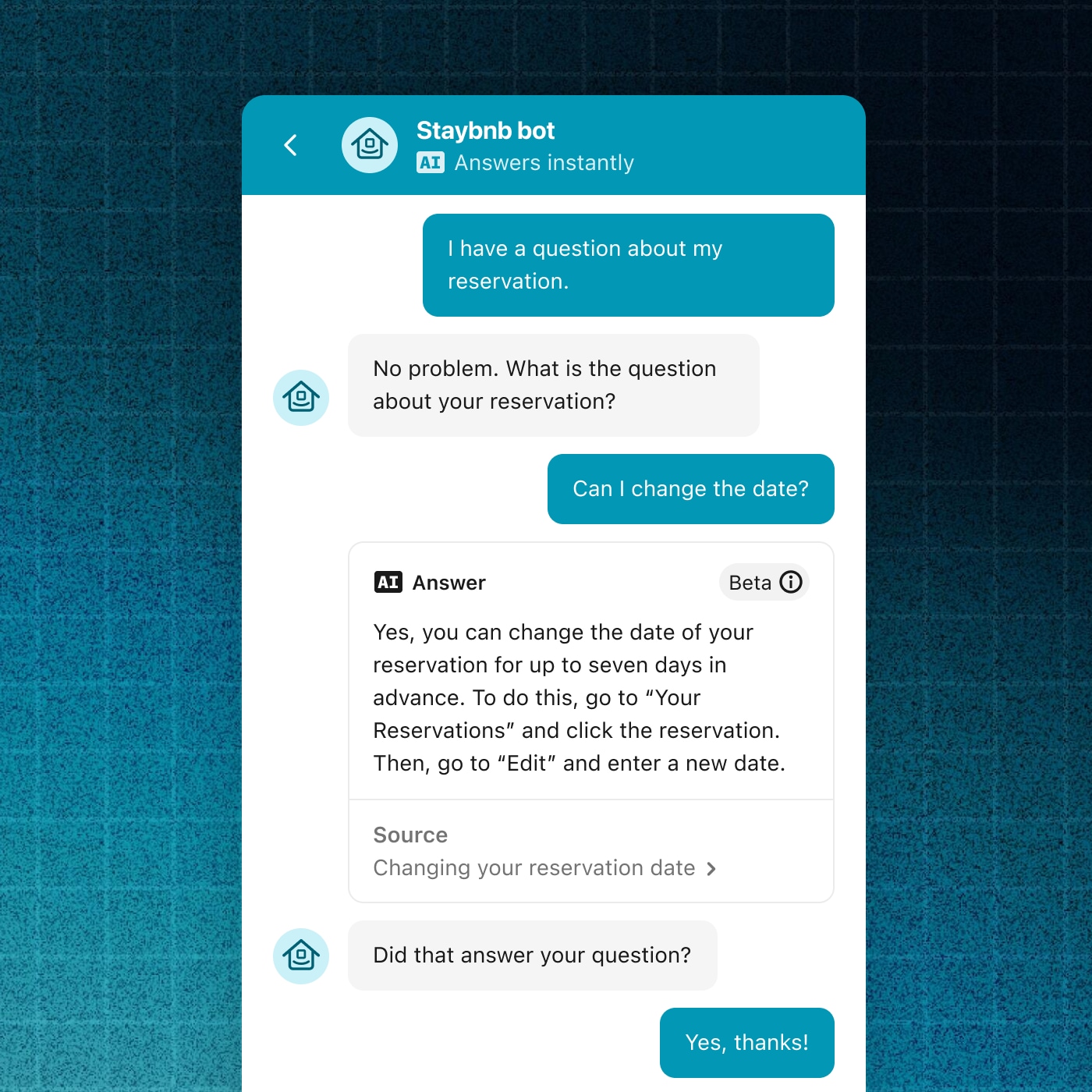
Fin operates on an outcome-based pricing model at $0.99 per resolution, charged when a conversation ends without being transferred to a human agent within 24 hours, or when the customer explicitly confirms the issue was resolved. This model has generated significant controversy among existing customers. Publicly documented complaints indicate that Intercom bills teams for resolutions they dispute, and that monthly AI costs can be 2-3x higher than the seat fees alone. One widely-cited user report describes budgeting $425 per month for seat licenses and receiving a bill exceeding $1,300 once Fin AI resolutions were applied.
Inbox and Ticketing
Intercom's shared inbox allows support teams to manage conversations from live chat, email, WhatsApp, SMS, social media, and phone channels in a single interface. Its ticketing system supports SLA policies, round-robin assignment, and custom workflows. The Advanced plan includes multiple team inboxes and workflow automation builders; the Expert plan extends these with 50 included Lite seats for broader team access.
Help Center and Product Tours
Intercom's Help Center is a full-featured knowledge base system supporting article publishing, automatic translation into 47 languages, brand customization, and video integration. Product Tours is an interactive onboarding tool that guides users through applications using multi-step walkthroughs - a feature with no equivalent in most chatbot-focused platforms.
Outbound Campaigns
Intercom includes capabilities for proactive outbound messaging: behavioral triggers, email campaigns, push notifications, banners, and a survey tool. These outbound features position Intercom as a marketing engagement platform in addition to a support tool, which contributes to both its value proposition and its pricing.
Platform Limitations
The breadth of Intercom's feature set comes with corresponding complexity. New team members typically require weeks to become proficient with the platform. Enterprise-level configuration requires dedicated IT or operations resources. For small teams that need support automation quickly, the onboarding investment is substantial. Intercom's pricing model also becomes unpredictable at scale: seat fees, Fin AI resolution fees, add-on Copilot ($35/user/month), proactive support features, and channel-specific messaging costs all compound into bills that frequently exceed initial estimates.
Paperchat: Platform Overview
Paperchat is an AI-native chatbot platform built around a single core capability: training a conversational AI on a business's specific content, then deploying that AI as a support agent, lead capture tool, and knowledge interface. The platform uses RAG (Retrieval-Augmented Generation) architecture, which means the AI generates responses by first retrieving relevant passages from the business's own documentation, website content, product information, and uploaded files before synthesizing a reply.
This architectural choice has a meaningful practical consequence: Paperchat's AI does not hallucinate answers based on generic training data. It answers from what the business has actually provided, which makes responses more accurate, more on-brand, and easier to audit.
AI Training and RAG Architecture
Gartner projects that 70% of companies will have RAG-based AI systems operating in their customer and internal systems by 2026. The practical advantage of RAG over static LLM fine-tuning is well-established: RAG systems achieve 95-99% accuracy on queries about specific policies or product information, and they update instantly when source content changes rather than requiring a costly model retraining cycle.
When a customer asks a Paperchat-powered AI about a company's return policy or specific product specifications, the AI retrieves the exact relevant section from the training content and builds its answer from that ground truth. This contrasts with AI systems that approximate answers from general training data, which tends to produce generic or occasionally incorrect responses for business-specific queries.
Data Source Options
Paperchat supports multiple content ingestion methods: direct text input, file uploads (PDFs, documents), URL scraping (individual pages and full sitemaps), and WooCommerce product data. Teams can train a chatbot on an entire documentation site, product catalog, or knowledge base in a single setup session.
Human Handover
For conversations that exceed the AI's scope or require a human judgment call, Paperchat supports configurable human handover. The humanHandoverEnabled flag on each chatbot allows teams to define exactly when and how conversations escalate to staff agents, maintaining a continuous conversation thread across the handover.
Lead Capture and Integrations
Paperchat includes native lead capture that collects contact information during chat conversations. On the integrations side, Paperchat connects to WooCommerce for e-commerce workflows, Cal.com for meeting booking directly in chat, and supports outbound webhooks to Zapier, n8n, and Make for custom workflow automation. Pusher-powered real-time messaging ensures conversations update instantly without polling.
Multi-Chatbot and Team Management
Paperchat supports deploying multiple chatbots within a single workspace, each trained on different content. This is particularly useful for agencies managing multiple clients, or businesses with distinct product lines that require different support contexts. Team management features support multiple users per workspace with role-based access.
Feature-by-Feature Comparison
| Feature | Paperchat | Intercom |
|---|---|---|
| AI chatbot technology | RAG (content-trained, grounded responses) | Fin AI Agent (LLM + help center content) |
| AI accuracy on business-specific queries | Very high (retrieves from your content) | High (dependent on help center quality) |
| Training data sources | Text, files, URLs, sitemaps, WooCommerce | Help center articles |
| Human handover | Yes, configurable per chatbot | Yes, full inbox integration |
| Shared inbox | No (chatbot-focused) | Yes, omnichannel |
| Outbound campaigns | No | Yes (email, push, banners, product tours) |
| Product tours / onboarding | No | Yes |
| Help center / knowledge base | No (training content only) | Yes, full-featured public help center |
| Lead capture | Yes, native | Yes, via bots and forms |
| WooCommerce integration | Yes, native | Limited (via integrations/Zapier) |
| Cal.com booking | Yes, native | No |
| Zapier / n8n / Make webhooks | Yes, native | Via Zapier (limited on lower plans) |
| Multi-chatbot support | Yes | No (single Messenger per workspace) |
| Multi-tenancy / agency support | Yes | Limited |
| Setup time | Under 30 minutes | Days to weeks |
| Learning curve | Low | High |
| Mobile-first widget | Yes | Yes |
Intercom vs. Paperchat: Monthly Pricing Comparison
Per-plan and real-world 5-seat team cost (USD/month)
Source: Intercom.com pricing page 2026 (seat-only fees, annual billing); Paperchat.co pricing page 2026. The 5-seat real cost for Intercom includes seat fees plus estimated Fin AI resolution fees at a 50% resolution rate on 1,000 monthly conversations.
Pricing Comparison
The pricing structures of these two platforms are fundamentally different in design, and that difference has cascading effects on total cost of ownership.
Intercom Pricing (2026)
Intercom operates on a per-seat model with three tiers (billed annually):
| Plan | Price Per Seat/Month | Key Features |
|---|---|---|
| Essential | $29 | Fin AI Agent, shared inbox, ticketing, help center, basic reports |
| Advanced | $85 | Workflow builder, multiple inboxes, round-robin assignment, 20 free Lite seats |
| Expert | $132 | Advanced permissions, 50 free Lite seats, enterprise features |
These seat fees are the floor, not the ceiling. Fin AI Agent charges $0.99 per resolved conversation on top of seat fees. Additional costs include:
- AI Copilot (agent assist): $35/user/month
- Proactive support (outbound campaigns, product tours): additional tier fees
- WhatsApp and SMS channels: metered usage fees
- Outbound messages: charged per message above plan limits
A realistic cost for a 5-person support team on the Essential plan handling 1,000 monthly conversations with a 50% Fin resolution rate: $145 in seats + $495 in AI fees = $640/month minimum. At the Advanced tier with 8 seats and 2,100 AI resolutions, the math reaches approximately $2,960/month before any add-ons (Chatarmin, 2026).
Paperchat Pricing (2026)
Paperchat uses a flat credit-based model with no per-seat fees and no per-resolution charges:
| Plan | Monthly Price | Credits/Month | Key Features |
|---|---|---|---|
| Free | $0 | 100 | 1 chatbot, basic features |
| Basic | $19 | Included | Multiple bots, full AI features, integrations |
| Pro | $49 | Included | Higher limits, team management, priority support |
| Enterprise | $99 | Included | Unlimited bots, white-label options, advanced analytics |
The entire Pro plan at $49/month costs less than one seat on Intercom's Advanced plan. There are no per-conversation charges, no per-agent fees, and no surprise bills at the end of the month.
Total Cost of Ownership: 12-Month Projection
| Scenario | Paperchat (Annual) | Intercom (Annual) |
|---|---|---|
| Solo operator / small business | $228 (Basic) | $348+ (1 seat Essential + AI fees) |
| 3-person support team, 500 AI convos/mo | $588 (Pro) | $5,940+ (3x Essential seats + ~$3k AI fees) |
| 5-person support team, 1,000 AI convos/mo | $1,188 (Pro x12) | $7,680-15,000+ (depending on tier + AI) |
| Agency managing 10 clients | $1,188 (Pro) | Not practical as designed |
The cost differential is not marginal. For SMBs and agencies, Paperchat's annual spend is frequently 10-20x lower than a comparable Intercom configuration, with no reduction in core AI chatbot performance.
Which Platform Fits Which Use Case
Choose Intercom When:
Your team needs a full omnichannel inbox. If your support operation spans email, chat, WhatsApp, SMS, and social channels and you need a single unified inbox with SLA tracking and team routing, Intercom's infrastructure is genuinely purpose-built for this. No chatbot-focused platform replicates this depth.
You need outbound engagement features alongside support. Intercom's product tours, behavioral campaigns, and push notifications serve a marketing and onboarding function that pure support tools do not address. If your team is responsible for both support and in-product onboarding, Intercom's feature breadth is defensible.
You are a mid-market or enterprise company with a dedicated support team and budget. Intercom's pricing model is designed for organizations that have allocated $30,000-100,000+ annually for customer communication infrastructure. The ROI calculus works at that scale when the full suite of features is utilized.
You already have a well-maintained help center. Fin AI performs best when trained on organized, high-quality help center articles. If your organization has invested in documentation and wants an AI that surfaces that content in real-time, Intercom's ecosystem is cohesive.
Choose Paperchat When:
You need an AI chatbot trained on your specific business content. Paperchat's RAG architecture is specifically designed for this. Whether the training content is a product manual, a knowledge base, a WooCommerce catalog, or scraped website content, Paperchat ingests it and builds a grounded AI that answers from your actual data rather than from approximated general knowledge.
You are an SMB, startup, or agency that cannot justify Intercom's pricing. At $19-99/month for the full AI feature set, Paperchat makes enterprise-grade AI chatbot technology accessible to businesses that would never appear in Intercom's target segment.
You manage multiple chatbots or multiple clients. Paperchat's multi-chatbot architecture and multi-tenancy design support agencies and multi-brand businesses in ways that Intercom's single-Messenger-per-workspace model does not.
You need rapid deployment. Paperchat can be configured, trained, and deployed in under 30 minutes. For businesses that need to ship quickly, this is a meaningful differentiator.
You run e-commerce on WooCommerce. Paperchat's native WooCommerce integration allows the AI to answer product-specific questions, support post-purchase inquiries, and capture leads with context that a generic integration layer cannot match.
You need booking and scheduling in chat. Paperchat's native Cal.com integration allows visitors to book meetings directly within the chat interface, a common use case for consultants, agencies, and service businesses that Intercom does not natively support.
Migration and Setup Considerations
Migrating from Intercom to Paperchat
The most common migration scenario is a business moving off Intercom because the per-resolution AI fees have exceeded budget. The primary considerations:
Content migration: Intercom's help center articles can be exported and re-ingested into Paperchat as training data. The process involves exporting articles, converting them to plain text or markdown, and uploading them as a data source. Alternatively, Paperchat's URL scraper can ingest a public help center directly.
Widget replacement: Paperchat provides a JavaScript snippet that installs in minutes on any website. For WordPress or WooCommerce sites, the process is a single plugin or code snippet insertion.
Conversation history: Paperchat does not import historical Intercom conversations. If retention of historical data is a compliance requirement, teams should archive Intercom data before transitioning.
Feature gaps to plan for: If the organization relied on Intercom's outbound campaign features, email sequences, or product tours, these need to be addressed in the migration plan - either by scoping them out, or by substituting with dedicated tools (e.g., a separate email marketing platform for campaigns).
Setting Up Paperchat from Scratch
For teams not migrating from an existing platform:
- Create an account and workspace at paperchat.co
- Add a chatbot and configure its name, greeting behavior, and tone
- Connect data sources: paste URLs, upload PDFs, enter text, or connect WooCommerce
- Configure integrations: Cal.com for booking, webhooks for Zapier/n8n/Make
- Copy the embed snippet and add to the website
- Test conversation flows, review lead capture configuration
The entire process, including content ingestion, typically takes 20-30 minutes for a straightforward deployment. Complex configurations with many data sources or custom webhook workflows take longer but remain within a single-session setup window.
Setting Up Intercom from Scratch
Intercom's setup timeline is significantly longer due to platform complexity:
- Initial configuration and Messenger customization: several hours
- Help center content creation or migration: days to weeks
- Fin AI configuration and testing: additional days
- Inbox routing rules, SLA policies, team assignment: requires dedicated admin time
- Full team onboarding: typically 2-4 weeks for a 5-10 person team
Enterprise deployments with custom integrations, compliance configurations, or multi-channel setups commonly take 4-8 weeks before going live.
The Bottom Line
Intercom is a mature, feature-rich platform built for organizations with dedicated support operations, significant software budgets, and requirements that extend beyond AI chat into omnichannel inbox management, outbound engagement, and in-product onboarding. For those organizations, Intercom's depth is genuinely valuable. The pricing - while high and increasingly unpredictable due to per-resolution Fin AI fees - is defensible when the full feature set is utilized.
For the majority of businesses evaluating live chat and AI chatbot tools in 2026, however, Intercom is more platform than the problem requires, and more expensive than the budget permits. A 5-person team spending $640-3,000/month on Intercom when $49/month on Paperchat delivers equivalent core AI chatbot performance is not getting better outcomes - it is getting a larger invoice.
Paperchat's RAG-powered AI chatbot is purpose-built for businesses that need accurate, content-grounded AI responses trained on their own materials, deployed quickly, and priced predictably. It does not try to be an outbound marketing platform or a full omnichannel inbox. It solves the problem it was designed to solve - AI-powered customer conversations - with precision and at a price that makes economic sense for SMBs, agencies, and startups.
The question is not which platform has more features. The question is which platform's features match your actual operational requirements, and whether the cost is proportionate to the value delivered. For most growing businesses, that answer points clearly toward Paperchat.
More Articles
How to Add a Live Chat Widget to Your Website in Under 10 Minutes
A step-by-step guide to installing Paperchat's AI chat widget on any website — no developer required.
March 29, 2026
How to Train an AI Chatbot on Your Own Business Data
Learn how to feed your website, documents, and FAQs into Paperchat so your AI chatbot answers like an expert on your business.
March 29, 2026
8 Ways AI Chatbots Reduce Support Ticket Volume
A detailed breakdown of how AI chatbots cut inbound support ticket volume, with current performance benchmarks, real case studies, and practical guidance on implementation.
April 8, 2026