
Building Multilingual Chatbots, Lessons From Tools That Serve Newcomers and Immigrants
Newcomer-facing products serve users across many first languages at once. Here are the practical lessons those tools teach about building multilingual chatbots that actually work, from language detection to escalation.

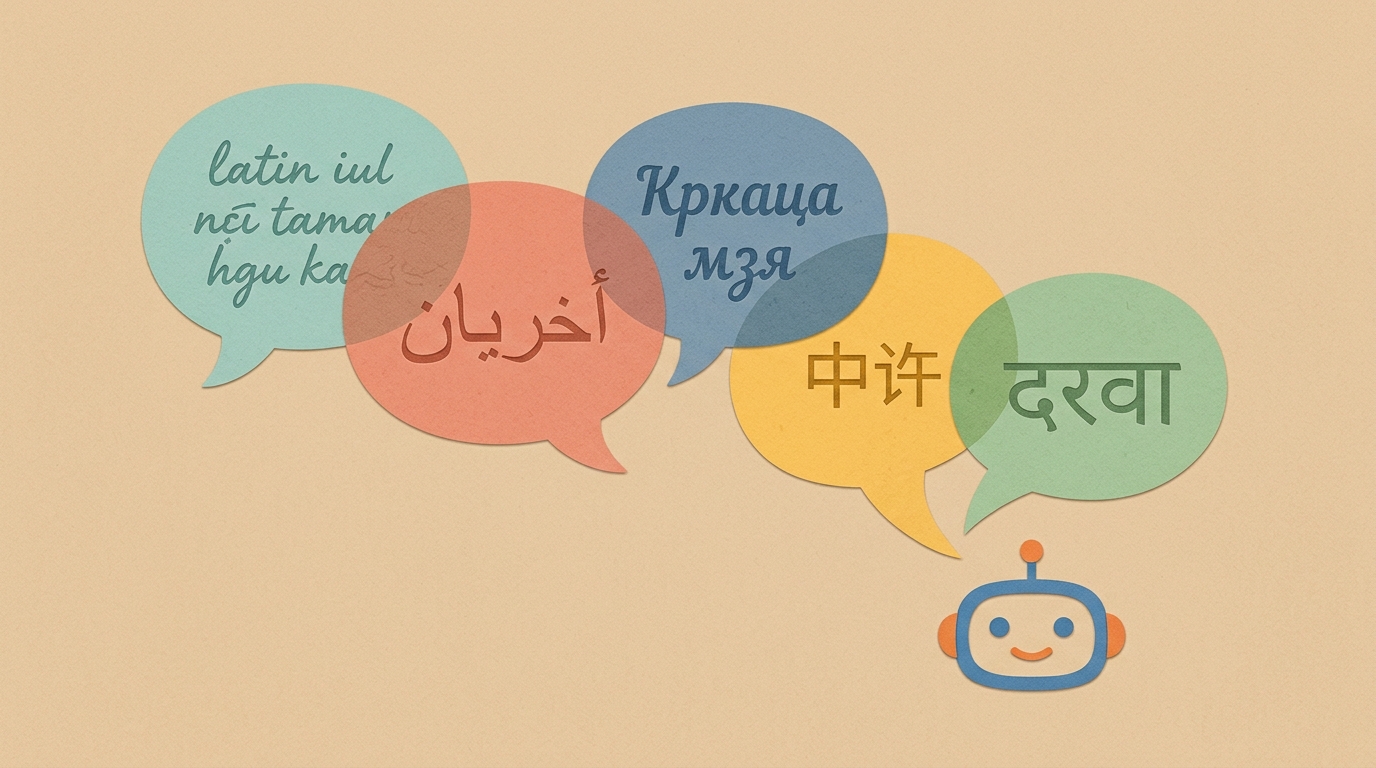
If you want to learn how to build a chatbot that genuinely works across languages, look at the products that have no choice but to get it right: the tools that serve immigrants and newcomers. A SaaS dashboard can usually assume its users tolerate English. A platform helping someone navigate a visa process, an integration course, or a citizenship exam cannot. Its users arrive speaking dozens of first languages, often under stress, often on a phone, and frequently while still learning the language of the country they have just moved to.
That constraint is a useful teacher. The design decisions these tools are forced to make are the same decisions any business should make if it wants a chatbot that serves a global audience well. This article pulls those lessons together, using civic and newcomer platforms as the worked example.
Why newcomer tools are the hardest multilingual case
Consider the scale and diversity of a single civic audience. Germany naturalized a record 291,955 people in 2024, and the range of their backgrounds is striking.
New German Citizens by Former Nationality (2024)
A single civic test reaches speakers of Arabic, Turkish, Kurdish, Russian, Dari, Ukrainian and more.
Source: Statistisches Bundesamt (Destatis), naturalizations by former citizenship, 2024. Figures rounded; Syria alone accounted for roughly 28 percent of all naturalizations.
A single civic platform aimed at this audience is, in one product, serving Arabic, Turkish, Kurdish, Russian, Dari, Ukrainian, and many more first languages at the same time. More than one in four new citizens in 2024 came from Syria alone. There is no majority language to default to and quietly ignore everyone else.
This is exactly why a practice platform like the leben in deutschland test tool at lebenindeutschlandtest.eu is built from the start to present its content in multiple languages, with the German source material sitting alongside translations. The content is the same civic question catalog, but the interface meets users where they are linguistically. That is a product requirement, not a nice-to-have, and it forces a level of multilingual discipline most business tools never have to confront.
The lessons below come from watching what works in that environment.
Lesson 1: Detect language, do not interrogate the user
The weakest multilingual experiences open with a wall: pick your language from a list of twenty before you can do anything. For a stressed newcomer on a phone, that is friction at the worst possible moment.
The stronger pattern is automatic detection. When a user types their first message, a modern chatbot can detect the language and respond in it without ever asking. The list is still available for users who want to set a preference, but it is an option, not a toll gate. The default should be that the user types in Arabic and gets an answer in Arabic, with no setup step.
This is the single highest-impact decision in multilingual design, because it removes the one barrier that disproportionately turns away the users who need help most.
Lesson 2: Separate the static layer from the generated layer
Every multilingual chatbot has two distinct layers, and confusing them is a common mistake.
- The static layer is the fixed copy: the welcome message, button labels, menu items, and any legally precise text. These are set in advance and should be deliberately localized, often by a human, for each priority language.
- The generated layer is the dynamic answer the AI produces in conversation. This can be generated on the fly in the user's language from a single source knowledge base.
The reason to separate them is risk. A mistranslated welcome message is mildly awkward. A mistranslated legal disclaimer or a wrong instruction about an official process can do real harm. The generated layer benefits from AI's flexibility, while the static layer, especially anything touching law, money, or official procedure, deserves human-reviewed translation.
The table below shows how to think about the split.
| Content type | Layer | Translation approach | Why |
|---|---|---|---|
| Welcome message, menu labels | Static | Human-reviewed per language | First impression, frequently seen |
| General FAQ answers | Generated | AI, from one knowledge base | High volume, low risk, easy to update |
| Legal or procedural instructions | Static or reviewed | Human-reviewed | Errors carry real consequences |
| Free-form user questions | Generated | AI, detect and respond | Cannot be pre-written |
Lesson 3: Write the knowledge base once, serve it everywhere
A frequent misconception is that supporting ten languages means maintaining ten copies of your content. For most of the knowledge base, it does not.
A retrieval-augmented chatbot stores your source material once, typically in your primary language, and the model translates and responds in the user's language at answer time. You write the refund policy, the course overview, or the exam explanation a single time, and the system serves it in French, Arabic, Turkish, or Ukrainian as needed. This is how a platform like Paperchat handles multilingual support: auto-detect the visitor's language, generate the response from one knowledge base, and fall back to a default language only when confidence is low or the content does not exist in the requested language.
The exception, again, is content where precision is non-negotiable. For those items, the hybrid approach wins: keep AI translation for the long tail of general questions, and add human-reviewed versions of the handful of critical answers. You get broad coverage cheaply and accuracy where it counts.
Lesson 4: Plan escalation in the user's language
Multilingual support that breaks the moment a human gets involved is only half a system. If an Arabic-speaking user is doing fine with the bot and then gets handed to an English-only agent, the experience collapses at the most important moment.
Newcomer tools handle this by treating language as a routing attribute. When a conversation escalates, the user's detected language should travel with it, so the system can route to an agent who speaks it. If no such agent is available, the honest pattern is to say so, capture the user's contact details and preferred language, and promise a follow-up rather than dumping them into a conversation they cannot follow.
A chatbot platform that supports human handover should let you tag agents by the languages they speak and route accordingly. The goal is continuity: the language the user started in is the language they finish in, whether they are talking to the bot or a person.
Lesson 5: Know what the bot must never do
The most trustworthy newcomer tools are disciplined about their limits, and this discipline is itself a design lesson. A study or guidance chatbot can explain a process, but it should not pretend to be the official channel for it.
The leben in deutschland test example makes this concrete. A practice tool can drill the question catalog in a user's first language and explain the answers, but it cannot administer the real exam or report an official result. When a user is ready for the real thing, the tool should point them to the authoritative path, for instance the list of approved einbürgerungstest prüfstellen where the official test is actually sat. A bot that blurs that line, implying it can do something only a government-approved center can do, erodes the trust that multilingual newcomer audiences extend cautiously in the first place.
The general principle: in any domain with an official process, the chatbot helps the user prepare and understand, and routes them cleanly to the real channel for anything binding.
A checklist for multilingual chatbots
Pulling the lessons together, here is what a chatbot serving a multilingual or newcomer audience should do.
- Auto-detect language on the first message; offer a manual selector as a fallback, not a gate.
- Localize the static layer deliberately, with human review for anything legal or procedural.
- Maintain one knowledge base and let the AI generate answers in each user's language, adding human-reviewed translations only for high-risk content.
- Route escalations by language, carrying the detected language into human handover.
- Test with imperfect input, because real users write informal, mixed, and grammatically loose text in every language.
- Define hard limits and link out to authoritative channels for anything the bot must not do.
The broader takeaway
Multilingual support is often framed as a feature for large global enterprises. The tools that serve newcomers show that it is really a discipline, and one that any business can adopt. The hard part was never the translation; modern AI handles the generated layer well. The hard part is the design judgment: detecting instead of interrogating, separating static from generated content, maintaining one source of truth, carrying language through escalation, and being honest about limits.
A business adding multilingual chat to its website faces a gentler version of the exact problem a civic platform faces at its hardest. If you build to the standard those newcomer tools are held to, your global customers, who are also typing on a phone, also in a hurry, and also more loyal when served in their own language, will notice the difference.
More Articles
How to Build a Multilingual AI Chatbot for a Global Audience
A step-by-step guide to setting up Paperchat to detect visitor language automatically and respond in their native tongue — without managing multiple bots.
March 29, 2026
Why Multilingual AI Chat is a Competitive Advantage for Growing Businesses
With 75% of internet users browsing in a language other than English, multilingual AI chat is one of the few genuine competitive differentiators available to growing businesses today.
April 12, 2026
Can an AI Tutor Help You Pass the Einbürgerungstest? What the Data Says
A data-driven look at whether AI study tools actually improve outcomes on Germany's citizenship exam, how the Einbürgerungstest is scored, where you sit it, and where conversational practice helps most.
May 30, 2026