
Why Multilingual AI Chat is a Competitive Advantage for Growing Businesses
With 75% of internet users browsing in a language other than English, multilingual AI chat is one of the few genuine competitive differentiators available to growing businesses today.

The global internet is not primarily an English-language environment - and has not been for years. 75.6% of internet users browse in a language other than English (CSA Research, 2024). The majority of online purchasing decisions, product research sessions, and customer support interactions worldwide happen in Spanish, Mandarin, Arabic, French, Portuguese, and dozens of other languages. Yet the overwhelming majority of business websites - and specifically the chat support they offer - are configured for English-only interactions.
This is not a niche academic observation. It is a quantifiable revenue gap. CSA Research's landmark study on global consumer language preferences found that 72.4% of consumers are more likely to buy a product when information is presented in their own language, and a striking 56.2% said language availability is more important than price when deciding whether to make a purchase. A non-English speaking visitor encountering an English-only chat interface is not simply slightly less likely to convert - they are significantly less likely, in a way that can be directly measured against revenue.
For businesses that can deploy multilingual AI chat - and that deployment is now considerably more accessible than it was even two years ago - the opportunity is substantial. Not because multilingual support is intrinsically expensive to provide with modern AI, but because most competitors have not yet provided it.
The Scale of the Opportunity
Before examining how multilingual chat works and what its impact looks like, it is worth grounding the discussion in the actual scale of non-English online activity.
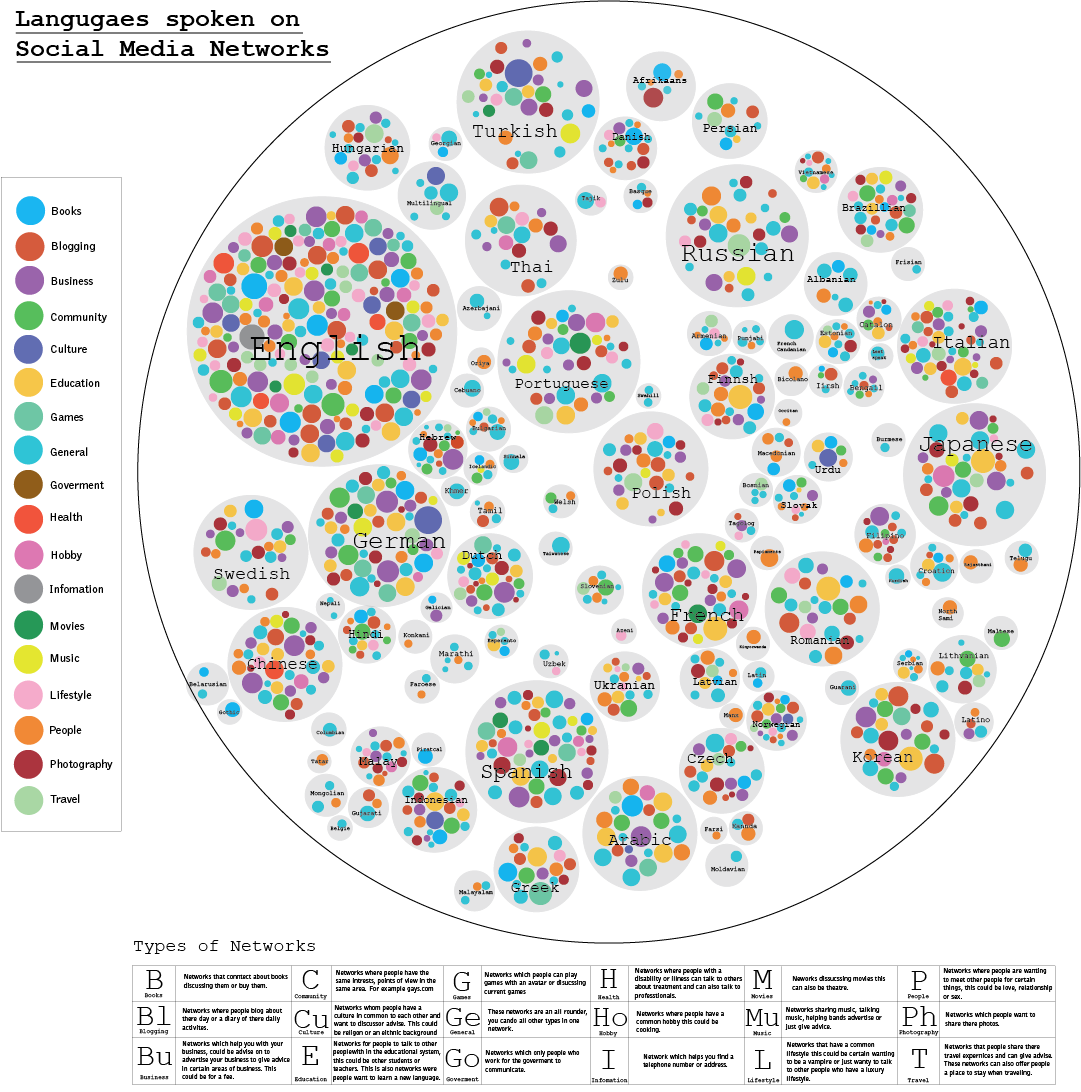
Internet user language distribution tells a story that most English-market businesses underestimate. English accounts for approximately 25.9% of internet content by some estimates, but that share does not map cleanly to user behavior. The Chinese internet alone encompasses over 1 billion users conducting the majority of their digital activity in Mandarin. The Spanish-speaking web encompasses 559 million native speakers across 20+ countries with rapidly growing e-commerce markets. The Arabic-speaking internet reaches 422 million speakers across the Middle East and North Africa, a region with purchasing power that foreign businesses consistently underestimate.
What is particularly instructive for business strategy is not just the size of these markets - it is the competitive landscape within them. Many large enterprises have invested in multilingual support infrastructure. Most small and mid-size businesses have not. The competitive dynamic this creates is unusual: a mid-size company deploying multilingual AI chat today is competing not against well-resourced multinationals who have already built this capability, but against other small and mid-size businesses that have not.
The Business Case by Sector
The revenue impact of language availability varies meaningfully by business type. Understanding the specific mechanism in each sector helps prioritize the deployment decision.
E-Commerce
For online retail, the conversion data is particularly striking. Non-English speaking visitors who arrive on a website and encounter support only in English face a compounded friction: product descriptions they may be reading through translation tools, checkout interfaces that may default to unfamiliar formats, and - critically - no ability to ask a clarifying question in their own language.
Cart abandonment rates for non-English speaking visitors on English-only e-commerce sites run 12-18% higher than for native English speakers on the same sites (Unbabel, 2024). This abandonment premium is almost entirely attributable to unresolved uncertainty. A shopper who could ask a quick question about a product dimension, shipping timeline, or return policy - in Spanish or Arabic - and receive a clear answer would, in a substantial proportion of cases, complete the purchase. Without that capability, the uncertainty resolves to inaction.
SaaS and Software
Free trial conversion is particularly sensitive to language friction. Users evaluating SaaS products during a trial period typically encounter onboarding friction points that generate questions. For a native English speaker, the path to answering those questions is relatively smooth: documentation, in-app help, and support chat are all available. For a non-English speaker, each of these channels introduces translation overhead and quality uncertainty.
Trial to paid conversion data from SaaS platforms with multilingual support shows measurably higher conversion rates for non-English language cohorts when onboarding support is provided in the user's native language. The mechanism is straightforward: users who can get accurate, clear answers to their onboarding questions reach the value realization moment faster, and users who reach value realization convert at higher rates.
Professional Services
In professional services - consulting, legal services, financial advisory, marketing agencies - trust is the primary conversion variable. Trust is established through communication quality, perceived expertise, and the sense that the service provider understands the client's specific context.
Communication in a client's native language is a trust signal of a fundamentally different order than communication through a translation tool. A French-speaking prospective client engaging with a business that responds fluently in French - with appropriate formality levels and cultural context - experiences a meaningfully different interaction than one who receives clunky machine-translated responses. The quality of that initial interaction shapes the entire subsequent relationship.
Real Estate
International real estate buyers are a high-value segment with distinctive language needs. A buyer from mainland China investigating property in a foreign market, or a GCC investor evaluating commercial real estate, represents a transaction value orders of magnitude above a typical domestic buyer. Providing qualified, responsive support in their language is not a courtesy - it is a competitive requirement for capturing their attention before another agent provides it.
Problems with Traditional Multilingual Approaches
Before examining how modern AI-native multilingual chat works, it is useful to understand why previous approaches to multilingual support were inadequate - because those limitations are real and they explain why most businesses have not yet solved this problem.
Google Translate integration on live chat is the most common ad-hoc solution. It has significant quality problems: it fails on technical and brand-specific terms, introduces obvious machine quality artifacts, and breaks the conversational flow. More fundamentally, it translates what the agent typed rather than generating a response that was written for the target language. The result reads like a translation, with the trust deficit that implies.
Human multilingual agents are expensive to hire, difficult to staff for more than two or three languages, and produce inconsistent quality unless the agents are native-level speakers in both languages. Even large enterprises with multilingual support teams typically cover four to six languages; the long tail of customer languages goes unserved.
Static multilingual FAQ pages address the question of language availability at a point in time, but they go stale quickly, require parallel maintenance in multiple languages, and do not cover the long tail of questions that fall outside the FAQ scope. A customer with a question that is slightly different from the FAQ structure has no path to an answer.
How AI-Native Multilingual Chat Works
Modern large language models - including the GPT-4 class models that underpin current AI chatbot platforms - have a fundamentally different relationship with language than translation tools.
A translation tool receives text in language A and produces an equivalent in language B. The quality is bounded by the quality of the translation model and by the fact that it is translating, not generating.
A large language model trained on multilingual data does not translate. It understands the intent and meaning of a question in whatever language it is asked, retrieves or generates relevant information, and produces a response in the same language - with appropriate grammar, vocabulary, and register for that language. The distinction matters significantly for quality:
- Technical terms are handled correctly because the model understands what is being asked, not just how to translate the words
- Brand-specific terminology in the knowledge base is applied correctly in the response language
- Formality and register are naturally appropriate for the target language and cultural context
- The response reads as having been written in that language, not translated into it
Critically, the knowledge base does not need to be in multiple languages. A business that has trained its chatbot on English-language product documentation, policy guides, and FAQ content can serve customers in Spanish, French, Arabic, and Mandarin using that same content. The AI bridges the language gap between the knowledge base and the customer's question automatically.
This dramatically reduces the implementation burden. Multilingual support does not require building and maintaining parallel content libraries in each language. It requires only a well-structured knowledge base in the business's primary language and a chatbot platform with capable multilingual AI - which Paperchat provides natively, without additional configuration or content duplication.
Which Languages Matter Most for Global Businesses
The prioritization question is practical: which languages should a business support first? The answer depends on where a business's traffic actually comes from - Google Analytics geography data answers this for any established site - but the global baseline data identifies the high-opportunity targets.
Website Conversion Rate by Visitor Language Group
English-only chat support vs. native-language AI chat (%)
Sources: CSA Research, 2024; Forrester CX benchmarks; composite e-commerce platform data.
| Language | Native Speakers | Key Markets | E-Commerce Growth Rate (YoY) |
|---|---|---|---|
| Mandarin Chinese | 1.1 billion | China, Taiwan, SE Asia diaspora | 9.2% |
| Spanish | 559 million | Latin America, US Hispanic, Spain | 14.8% |
| Arabic | 422 million | GCC, North Africa, Middle East | 18.3% |
| Portuguese | 258 million | Brazil (largest LatAm e-comm market), Portugal | 16.1% |
| French | 300 million | France, West Africa, Canada, Belgium | 11.4% |
| German | 135 million | Germany, Austria, Switzerland | 10.7% |
| Japanese | 125 million | Japan (world's 4th largest e-comm market) | 7.9% |
| Indonesian | 270 million | Indonesia (SE Asia's largest e-comm market) | 22.6% |
| Hindi | 602 million | India (fastest-growing major e-comm market) | 27.4% |
| Korean | 81 million | South Korea (world's 5th largest e-comm market) | 8.8% |
Arabic and Portuguese deserve particular attention for businesses that have not traditionally considered them high priority. Arabic-speaking markets - particularly the GCC countries (UAE, Saudi Arabia, Qatar, Kuwait) - represent some of the world's highest per-capita purchasing power, with strong demand for international goods and services. Brazil, the primary Portuguese-speaking market, is the largest e-commerce market in Latin America and one of the fastest-growing globally.
Hindi deserves attention as a forward-looking priority. India's e-commerce market is growing at 27.4% year-over-year and is projected to reach $350 billion by 2030 (IBEF, 2024). Businesses that establish multilingual engagement with Indian consumers now are building a position in what will be one of the world's largest consumer markets within a decade.
Measured Impact: The Conversion Data
The conversion impact of multilingual support is well-documented across several research contexts.
Overall conversion lift from non-English visitors. Websites with multilingual chat see 35-55% higher conversion rates from non-English speaking visitors compared to English-only chat deployments, according to Unbabel's 2024 multilingual customer experience report. This range reflects variation in product category, traffic quality, and chat deployment quality - but even at the low end, a 35% conversion improvement from a non-English visitor segment represents substantial incremental revenue.
Cart abandonment reduction. For e-commerce specifically, multilingual chat reduces cart abandonment from non-English visitors by 12-18% compared to English-only chat. The primary driver is pre-purchase question resolution: visitors who can ask questions in their language about shipping, compatibility, sizing, or returns complete purchases they would otherwise abandon.
Customer satisfaction. CSAT scores for multilingual chatbot interactions (where the bot responds in the customer's language) average 88.2% compared to 76.4% for English-only chat interactions with non-English speaking customers (Zendesk Customer Experience Trends, 2024). The 12-point gap reflects the fundamental difference between being understood and being translated - customers who receive a response that reads as though it was written for them, in their language, have a qualitatively different experience.
Revenue per visitor. Analysis across e-commerce deployments found that non-English speaking visitors served with native-language AI chat generate 2.3x the revenue per session of non-English speaking visitors encountering English-only support. This multiplier captures both the conversion rate improvement and the higher average order value that accompanies greater purchase confidence.
The Competitive Landscape
The competitive context for multilingual chat is currently unusually favorable for businesses willing to invest.
Most large enterprises have multilingual support capabilities, but these were built with significant engineering investment over many years. Most small and mid-size businesses do not have them. The deployment of AI-native multilingual chat has changed the implementation economics dramatically: what once required building and staffing dedicated language teams now requires configuring a chatbot platform with multilingual capability.
The window in which multilingual chat represents a genuine differentiator - rather than a baseline expectation - is finite. As AI chatbot adoption accelerates and multilingual support becomes a standard feature expectation, the businesses that have already deployed it will have the advantage of operational experience, tuned knowledge bases, and established customer relationships with non-English speaking visitor segments.
First-mover advantage in multilingual chat within a given market niche can be significant. A B2B software company that establishes itself as the only player in its category to offer Arabic-language support has a meaningful differentiation point with Arabic-speaking enterprise buyers - who currently have to work around English-only interfaces and are highly aware of which vendors make that easier.
For SMBs operating in competitive markets, multilingual support is one of the few genuine differentiators currently available: not a marginal optimization, but a capability that most direct competitors do not have and that directly impacts a measurable revenue outcome.
Implementation Considerations
Deploying multilingual AI chat effectively requires attention to several practical factors that go beyond the technology selection.
Prioritizing Languages Using Traffic Data
The right starting point is not the globally largest languages - it is the languages already represented in your website traffic. Google Analytics geography data shows where current visitors are arriving from; cross-referencing country of origin with primary language spoken provides the target language list. A business receiving significant traffic from Brazil and Mexico should prioritize Portuguese and Spanish before Mandarin, regardless of global market size rankings.
Segment your non-English visitor traffic by conversion rate and time-on-site. High-traffic, low-conversion cohorts from specific geographies are the highest-priority targets - they represent engaged visitors currently failing to convert due to language friction.
Testing Multilingual Response Accuracy
LLMs produce high-quality multilingual responses in major languages but vary in quality for less common languages and for highly technical or domain-specific terminology. Before fully deploying multilingual capability, test representative queries in each target language with native speakers if possible, or with professional language reviewers.
Pay particular attention to: technical terminology that appears in the knowledge base, brand-specific product names and features, and numerical information (pricing, measurements, dates) where translation errors can be consequential.
Cultural Sensitivity Beyond Language
Language and culture are related but distinct. A chatbot that generates grammatically correct Spanish for Latin American users but uses formal Castilian Spanish conventions is communicating with the right words and the wrong register. Formality levels vary significantly across languages: Japanese has multiple formal/informal registers with different vocabulary and grammar; French formal business communication has conventions that differ meaningfully from casual French.
For high-value markets, configuring the chatbot's tone and formality level to match the cultural expectations of the target market improves response quality beyond what language accuracy alone achieves. This is most important for professional services and B2B contexts, where relationship formality signals professional credibility.
Supplementing AI with Human Agents for Specific Languages
For languages where traffic volume is high enough to justify it, hybrid support - AI handling routine queries in a given language, human agents available for escalation in the same language - represents the optimal experience. The AI handles the long tail of common questions at scale; human agents address complex situations that benefit from native-language expertise.
For languages where human agent staffing is not feasible, clear escalation messaging helps: a conversation that the AI handles well in Spanish but must escalate to an English-speaking agent should acknowledge the transition explicitly and offer the customer a path that works for them, such as an email response in their language or a callback.
The Compounding Value of Multilingual Engagement
The revenue impact of multilingual chat compounds in ways that point-in-time conversion data does not fully capture. A non-English speaking customer who receives excellent support in their language during a first purchase is more likely to return, more likely to recommend the business to peers who share their language background, and more likely to expand their relationship with the business over time.
In markets where the language gap between customer and business has historically been a barrier - Latin America for US e-commerce, Arabic-speaking markets for European professional services, Southeast Asia for B2B SaaS - being known as the business that makes the experience easy for local-language customers generates organic referral value that acquisition spending cannot replicate.
The businesses that deploy multilingual AI chat now are not just capturing incremental revenue from existing traffic. They are establishing a position in customer segments that, for most of their competitors, remain effectively inaccessible.
More Articles
How to Add a Live Chat Widget to Your Website in Under 10 Minutes
A step-by-step guide to installing Paperchat's AI chat widget on any website — no developer required.
March 29, 2026
8 Ways AI Chatbots Reduce Support Ticket Volume
A detailed breakdown of how AI chatbots cut inbound support ticket volume, with current performance benchmarks, real case studies, and practical guidance on implementation.
April 8, 2026
How to Capture More Leads with an AI Chat Widget on Your Website
Turn passive website visitors into qualified leads using Paperchat's AI chat widget — with proactive messaging, lead forms, and CRM sync.
March 29, 2026