


The chatbot market has fractured into two camps that are nearly unrecognizable to each other. On one side are no-code platforms built for marketers, customer success managers, and founders who need a working chatbot this week without writing a single line of code. On the other side are developer-first platforms built for engineers who want to own every layer of the stack, from conversation logic to deployment infrastructure. Both categories solve the same business problem - automated customer interaction at scale - but they do it through radically different philosophies, and choosing the wrong one is an expensive mistake measured in months of lost time and rework.
This article examines both categories with honest data: what each approach actually delivers, where each falls short, and which type of team belongs on which type of platform.
Two Categories, Two Philosophies
The no-code and developer-first distinction is not simply about whether you write code. It reflects a deeper difference in where control and flexibility sit.
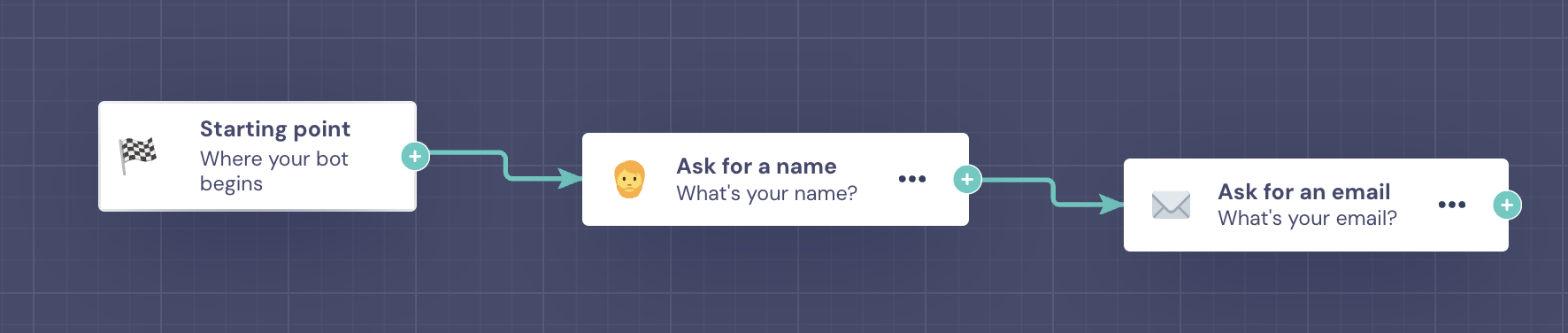
No-code and low-code platforms abstract the technical infrastructure entirely. Visual drag-and-drop builders, pre-built integrations, managed hosting, and conversation templates mean a non-technical team member can configure, deploy, and manage a chatbot without engineering involvement. Examples in this category include Tidio, ManyChat, Chatfuel, Landbot, and Paperchat.
Developer-first and API-first platforms expose the full technical surface area. Conversation logic is defined in code or detailed configuration files. The platform provides SDKs, APIs, and infrastructure primitives - the team brings the engineering capability to assemble them. Examples include Botpress, Rasa, Dialogflow (Google), Microsoft Bot Framework, and the OpenAI Assistants API.
Neither category is inherently superior. The correct choice depends on variables that are specific to each organization: technical capacity, timeline, budget, compliance requirements, and how much the chatbot needs to deviate from standard conversation patterns.
No-Code Platforms: Strengths
Deployment Speed
The most striking advantage of no-code chatbot platforms is how quickly a functional chatbot reaches production. For standard implementations - FAQ deflection, lead capture, product Q&A, basic customer support - deployment timelines of hours to a few days are realistic. Developer-first platforms require 2-8 weeks for equivalent functionality, even for experienced engineering teams, because the infrastructure setup, NLU training, integration work, and testing cycles cannot be compressed below a certain floor (Gartner, 2025).
For small businesses and startups, speed to deployment is not just a convenience - it is a competitive and cash-flow consideration. A chatbot that is live and deflecting support tickets in three days generates ROI that a chatbot still in development three weeks later does not.
No DevOps Overhead
No-code platforms handle hosting, scaling, security patching, uptime monitoring, and infrastructure maintenance. None of these concerns fall to the business's team. For organizations without dedicated DevOps capacity - which describes the majority of SMBs and even many mid-market companies - this is not a minor convenience. Running a self-hosted chatbot infrastructure requires server provisioning, SSL certificate management, load balancer configuration, and ongoing maintenance that compounds over time.
The operational debt of maintaining your own chatbot infrastructure is real and frequently underestimated during the build-vs-buy evaluation. No-code platforms absorb this cost in their subscription pricing.
Team Accessibility
No-code platforms can be managed by customer success managers, marketing teams, and support leads without engineering involvement. When conversation flows need updating, when new FAQ content needs to be added, or when integrations need to be reconfigured, the change can be made by the team member closest to the customer interaction - not by an engineer who first needs to understand the context before touching the configuration.
This has measurable implications for iteration speed. On a developer-first platform, every content update that requires configuration changes is a developer ticket. On a no-code platform, it is a five-minute edit by the person who received the customer feedback.
Built-In Integrations
Leading no-code platforms offer pre-built integrations with the tools businesses already use: CRMs, helpdesks, e-commerce platforms, calendar systems, email providers, and payment processors. These integrations are maintained by the platform vendor and typically require only authentication credentials to activate. The alternative on developer-first platforms is custom integration development - which for a single integration can represent one to three weeks of engineering effort.
No-Code Platforms: Limitations
Customization Ceiling
The most honest critique of no-code platforms is the customization ceiling. When conversation logic needs to deviate significantly from standard patterns - dynamic multi-step flows driven by external data, complex conditional branching, custom NLU intents, or deeply embedded business rules - no-code platforms eventually run out of surface area for configuration. Businesses that start on a no-code platform and later require enterprise-grade customization frequently encounter this ceiling at 12-18 months.
The ceiling varies significantly by platform. Some no-code tools genuinely stop at simple FAQ bots. Others support webhooks, API calls, conditional logic, and custom integrations that take the platform much further than the label "no-code" implies.
Vendor Lock-In
No-code platform conversations, trained knowledge bases, and configured flows exist inside the vendor's proprietary system. Migration to another platform requires rebuilding from scratch - the conversation data, training content, and integration logic do not port cleanly. For businesses that invest heavily in training a chatbot's knowledge base over months or years, this lock-in is a real risk if the vendor changes pricing, service quality, or ceases operations.
Pricing at Scale
No-code platforms are priced for accessibility at low volumes, but pricing models that charge per conversation, per resolution, or per seat can scale unfavorably as usage grows. A platform that is economical at 500 conversations per month may become expensive at 5,000 - and the per-resolution pricing models adopted by some AI chatbot vendors can generate substantial costs at enterprise-scale interaction volumes.
This is not universal. Flat-rate pricing models that scale by capability rather than by usage volume avoid this problem. But businesses evaluating no-code platforms should model their cost trajectory at 3x, 5x, and 10x their current interaction volume before committing.
Developer-First Platforms: Strengths
Unlimited Customization
Developer-first platforms impose no customization ceiling. Any conversation flow, any NLU architecture, any integration pattern, any response format is achievable in code. For use cases that genuinely require this flexibility - deeply embedded enterprise workflows, multi-step transactional conversations, custom voice interfaces, or sophisticated routing logic across dozens of agent queues - developer-first platforms are the only viable option.
The technical surface area also extends to model selection and configuration. Enterprises with specific AI model requirements (particular LLMs for compliance reasons, fine-tuned models for domain-specific accuracy, locally hosted models for data residency) can implement these through developer-first platforms in ways that no-code platforms typically cannot accommodate.
Self-Hosted Option for Security and Compliance
Regulated industries - healthcare, financial services, legal, government - frequently cannot send conversation data through a third-party SaaS platform's infrastructure. Developer-first platforms like Rasa and self-hosted Botpress support fully on-premises deployment, where all conversation processing occurs within the organization's own infrastructure. No conversation data leaves the environment.
This is a genuine requirement for a meaningful segment of enterprise buyers, and it is a requirement that no-code SaaS platforms cannot meet by architectural design.
Full Data Control
Developer-first platforms allow organizations to own every piece of conversation data, training data, and analytics output. For businesses where customer conversation data is itself a valuable asset - training future models, feeding analytics platforms, building customer behavior profiles - owning the data pipeline end-to-end has strategic value beyond compliance.
Integration Flexibility
No pre-built integration required: any system accessible via API can be integrated into a developer-first chatbot. Legacy enterprise systems, custom internal tools, proprietary databases, and industry-specific platforms that no-code vendors have no reason to build connectors for are all accessible with sufficient engineering effort.
Developer-First Platforms: Limitations
Implementation Time
The most significant practical limitation of developer-first platforms is time to deployment. A median implementation for a functional customer support chatbot on Rasa, Microsoft Bot Framework, or a custom OpenAI Assistants API integration runs 4-8 weeks with an experienced developer, and 8-16 weeks for teams new to the platform (Gartner, 2025). Complex enterprise implementations routinely exceed six months.
During this window, the business has spent engineering budget without a live product. For businesses that evaluated a chatbot as a tactical solution to an immediate problem - an overwhelmed support inbox, a spike in inbound leads - the implementation timeline is itself an obstacle.
Ongoing Engineering Dependency
Developer-first chatbots do not maintain themselves. NLU model retraining, conversation flow updates, integration maintenance, infrastructure upgrades, and security patches all require engineering involvement on an ongoing basis. For a post-launch chatbot in active use, the ongoing maintenance load is typically 10-20% of the initial build effort per month - a recurring engineering cost that is easy to overlook during the initial build-versus-buy analysis.
When the engineer who built the chatbot leaves, the institutional knowledge around the custom implementation often leaves with them. No-code platforms maintain configuration in interfaces that any team member can learn; developer-first implementations may require reading through complex custom code before any change can safely be made.
Infrastructure Management
Self-hosted options require the full DevOps stack: server provisioning, database management, load balancing, monitoring, alerting, and disaster recovery. Cloud-hosted developer-first options reduce this burden but do not eliminate it. Engineering time spent on infrastructure is engineering time not spent on product development, and for most businesses this trade-off is unfavorable.
High Total Cost
The licensing cost of open-source developer-first platforms like Rasa is zero. The total cost of ownership is not. Engineering salaries, infrastructure costs, third-party service integrations, and ongoing maintenance produce a total cost that typically exceeds no-code platform costs by 3-5x over a two-year period for equivalent functionality (Forrester, 2025).
The Middle Ground: Hybrid Platforms
Between pure no-code and pure developer-first, a category of hybrid platforms has emerged that provides no-code simplicity for the 80% of use cases that fit standard patterns, while offering developer extensibility - webhooks, API access, custom integrations, conditional logic - for the 20% that do not.
This architecture is increasingly the right answer for growing businesses. A marketing team can configure the chatbot without engineering support. When the use case requires connecting to a proprietary CRM or calling a custom API endpoint, the engineering team can extend the chatbot through webhooks and API access without rebuilding from scratch.
Paperchat is an example of this hybrid positioning: non-technical teams can train the AI on business content, configure conversation flows, and deploy a production chatbot in hours. Engineering teams who need to extend the platform - triggering webhooks when leads are captured, connecting external booking systems, or integrating with proprietary data sources - have the API access and webhook infrastructure to do so without leaving the platform.
This approach avoids the two failure modes that define each extreme: the no-code ceiling that forces a rebuild when requirements grow, and the developer-first onboarding tax that delays value realization by weeks or months.
Total Cost of Ownership Comparison
License cost is the least important variable in the total cost of ownership calculation. The full picture includes implementation labor, infrastructure, ongoing maintenance, and the opportunity cost of delayed deployment.
| Cost Component | No-Code Platform | Developer-First Platform | Hybrid Platform |
|---|---|---|---|
| License / SaaS fee | $20-500/mo | $0-2,000/mo (infrastructure) | $30-600/mo |
| Initial implementation | 4-40 hours internal | 200-600+ hours engineering | 8-60 hours mixed |
| Implementation labor cost | $200-2,000 | $20,000-60,000+ | $800-6,000 |
| Ongoing maintenance (monthly) | 1-4 hours | 20-80+ hours engineering | 2-8 hours mixed |
| Annual maintenance labor | $1,200-4,800 | $24,000-96,000+ | $2,400-9,600 |
| Infrastructure | $0 (managed) | $200-2,000+/mo | $0 (managed) |
| Year 1 total (median) | $3,000-8,000 | $50,000-120,000 | $5,000-18,000 |
| Year 2 total (ongoing) | $2,000-6,000 | $30,000-80,000 | $3,000-12,000 |
Figures represent estimates for a mid-market business with moderate interaction volume. Developer costs estimated at $100/hour blended rate.
Head-to-Head Comparison
| Dimension | No-Code | Developer-First | Hybrid |
|---|---|---|---|
| Time to first deployment | Hours to days | Weeks to months | Days to weeks |
| Technical team required | None | 1-3 engineers | Optional |
| Customization limit | Medium - platform ceiling applies | None | High - extensible via API/webhook |
| Self-hosting option | Rarely | Yes | Rarely |
| Data ownership | Vendor-managed | Full | Vendor-managed (export available) |
| Compliance / data residency | Limited | Full control | Limited |
| Integration method | Pre-built connectors | Custom code | Pre-built + webhooks/API |
| Ongoing maintenance | Low | High | Low-medium |
| Team member accessibility | High | Low | Medium-high |
| Pricing model risk | Per-conversation scaling | Infrastructure scaling | Flat-rate typical |
| Vendor lock-in risk | High | Low (open source options) | Medium |
| Iteration speed (post-launch) | Fast | Slow (engineering bottleneck) | Fast for content; medium for logic |
The Decision Framework
Choosing between no-code, developer-first, and hybrid comes down to five variables that each organization needs to evaluate honestly.
1. What are your actual technical resources?
If the business has no in-house engineering capacity - or the engineering team is fully allocated to product development - a developer-first platform is a fantasy, not a strategy. The realistic options are no-code or hybrid. If there is a dedicated team willing to own the chatbot infrastructure long-term, developer-first becomes viable.
2. How unusual are your conversation requirements?
Standard use cases - FAQ deflection, lead capture, appointment booking, order status, basic customer support - are well-covered by no-code platforms. If the chatbot needs to execute complex multi-step business processes, integrate deeply with proprietary legacy systems, or implement custom NLU with industry-specific intent taxonomy, developer-first platforms offer capabilities that no-code platforms cannot match.
3. What is the deployment timeline?
If the business needs a working chatbot in production within two weeks, developer-first platforms are not options - the implementation timeline alone makes them ineligible. No-code and hybrid platforms are the only paths to that timeline.
4. What are the compliance and data residency requirements?
Regulated industries with strict data residency requirements - healthcare (HIPAA), financial services, EU data subjects (GDPR with specific processing restrictions) - may require self-hosted options that only developer-first platforms provide. Businesses without these requirements gain little from the additional complexity of self-hosted deployment.
5. What is the realistic total budget over two years?
Run the full TCO calculation, not just the license fee. If the engineering labor cost of a developer-first implementation exceeds the no-code platform's two-year subscription cost by 5-10x, that is the correct comparison - not the $0 license fee on an open-source platform.
Scenario Guide: Which Platform Type Fits Which Team
Startup or small business (under 20 employees, no dedicated engineering): No-code or hybrid. The goal is time-to-value. A chatbot that handles FAQ deflection and lead capture deployed in two days is worth more than a custom implementation that never ships. Paperchat's flat-rate workspace pricing makes cost predictable regardless of conversation volume.
E-commerce business on Shopify or WooCommerce: No-code or hybrid with native integrations. The chatbot needs to connect to order management, product catalogs, and return workflows - which pre-built integrations handle more efficiently than custom code. Platforms with native WooCommerce and Shopify connectors reduce implementation time significantly.
SaaS company with a technical team and custom requirements: Hybrid. A platform that provides no-code accessibility for marketing and customer success teams while offering API/webhook extensibility for the engineering team who needs to connect proprietary systems. This avoids both the customization ceiling of pure no-code and the full infrastructure burden of developer-first.
Enterprise with strict compliance requirements (healthcare, financial services): Developer-first with self-hosted deployment, or a no-code enterprise tier with explicit data processing agreements and SOC 2 / HIPAA certification. The compliance requirement often overrides all other considerations.
Agency building chatbots for multiple clients: Hybrid platform with white-label options. No-code simplicity for client onboarding, API access for custom integrations, and workspace management for operating multiple client instances without separate contracts.
The Direction of the Market
The trend line in the chatbot builder market is toward hybrid. The businesses that evaluated developer-first platforms as their only path to sophisticated chatbot functionality in 2022 are increasingly finding that no-code platforms have added the technical extensibility they previously lacked - webhooks, API access, conditional logic, and custom integrations have become table stakes even on platforms designed for non-technical users.
Simultaneously, developer-first platforms are adding visual interfaces and pre-built components that reduce the pure engineering burden. The gap between the two categories is narrowing, with the center of gravity moving toward hybrid platforms that provide accessibility without sacrificing extensibility.
For most businesses evaluating a chatbot platform today, the operative question is not "no-code or developer" - it is "which platform gives us the simplicity to deploy fast and the extensibility to grow into?"
More Articles
How to Add a Live Chat Widget to Your Website in Under 10 Minutes
A step-by-step guide to installing Paperchat's AI chat widget on any website — no developer required.
March 29, 2026
8 Ways AI Chatbots Reduce Support Ticket Volume
A detailed breakdown of how AI chatbots cut inbound support ticket volume, with current performance benchmarks, real case studies, and practical guidance on implementation.
April 8, 2026
10 Customer Support Tasks You Can Automate with an AI Chatbot Today
A detailed breakdown of the customer support tasks AI chatbots handle best — with data, real examples, and guidance on where human agents still matter.
April 8, 2026