
How a Coaching Business Automated Lead Qualification with Paperchat
How Executive Clarity, a leadership coaching firm, used Paperchat to cut lead response time from 18 hours to immediate, boost discovery call booking rates by 168%, and recover 10 hours of coach time per week.

The economics of a small professional services firm depend on time in a way that most software companies do not. For a coaching or consulting business, billable time is the product. Time spent on non-billable tasks - email qualification chains, scheduling back-and-forth, intake forms, follow-up reminders - comes directly out of the capacity available for client work and, by extension, revenue.
Executive Clarity, a leadership coaching practice with two coaches and $350,000 in annual revenue, had a lead qualification process that worked in the sense that qualified leads eventually became clients. But "eventually" was doing a lot of work in that sentence. The process from first contact to scheduled discovery call averaged 1-2 weeks and required 3-5 emails per lead. Across both coaches, lead qualification and scheduling consumed 12 hours per week - time that was not generating revenue and was not enjoyable work.
The problem was compounded by two structural issues the coaches had identified but not solved: a 40% rate of qualified leads going cold before a discovery call could be scheduled, and a 35% no-show rate on discovery calls that had been scheduled. The cold leads were lost because the qualification email chain was slow; the no-shows were booked - and were showing up - because the leads were not properly qualified before the call was accepted.
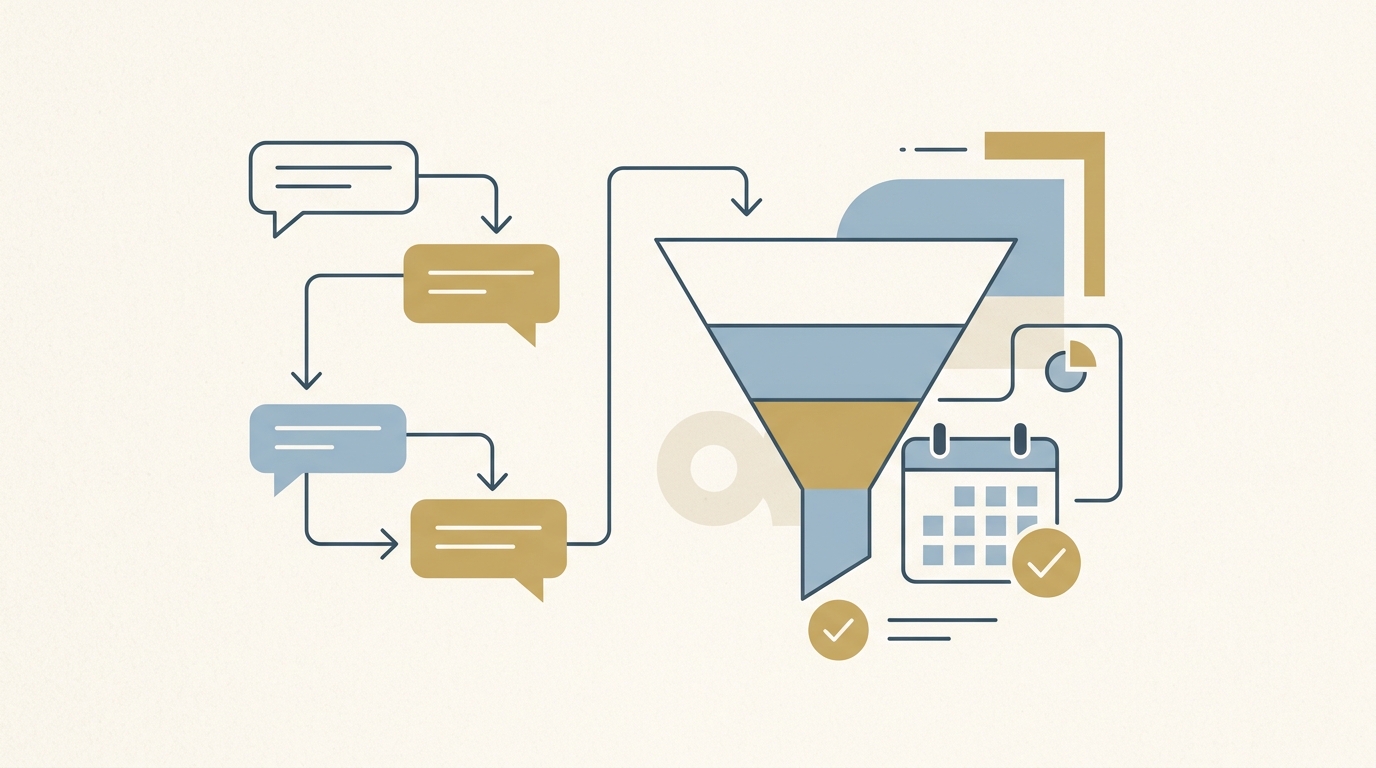
This is the story of how Executive Clarity used Paperchat to redesign their lead qualification process from contact form to discovery call, automate it end-to-end, and recover 10 hours per week of coach time while increasing new client starts by 40% over six months.
The Lead Qualification Problem in Professional Services
The lead qualification challenge in coaching and consulting differs from the equivalent challenge in SaaS in one critical respect: the stakes of a poor match are higher. A SaaS free trial that converts a non-ideal user has minimal downside - they churn after 30 days. A coaching engagement that begins with a poorly-matched client costs weeks of coach time, creates a suboptimal client experience, and carries real opportunity cost in the form of displacement of a better-matched client.
Proper qualification was not optional at Executive Clarity. It was the mechanism that protected the quality of the client portfolio. The problem was that doing it manually was consuming 12 hours of coach time per week - a structural tax on the business that grew proportionally with lead volume.
The coaches had mapped out what good qualification required:
- Understanding the prospect's organizational role and level of seniority
- Assessing their company size and industry context
- Identifying the specific leadership challenge or development goal
- Gauging their readiness and timeline (immediate need vs. exploratory)
- Understanding their budget range (to avoid allocating a discovery call to a prospect who cannot afford the engagement)
This was a 20-30 minute intake conversation. Done by email, it took 3-5 exchanges over 3-10 days. Done by phone, it required a coach or assistant to be available. Neither path was efficient, and neither path was available at the hours when many prospects were actually reaching out.
Understanding the Lead Landscape
Before configuring any automation, the team did a systematic review of 18 months of lead data. The findings shaped the entire implementation strategy.
| Lead Source | Share | Quality Pattern | Timing Pattern |
|---|---|---|---|
| Website contact form | 45% | Mixed - high volume, variable quality | Spread throughout week |
| LinkedIn referrals | 38% | Higher quality on average, shorter sales cycle | Business hours, Mon-Thu |
| Podcast appearances | 17% | High intent, self-selected, often pre-qualified | Concentrated post-episode release |
Two findings from this analysis were particularly actionable:
First, 28% of all leads came in on evenings and weekends - outside the hours when either coach was available to respond. These leads were not being captured at all in the previous process. A prospect who submitted a contact form at 9pm on a Sunday received an auto-responder confirmation and a manual follow-up email sometime Monday morning. By Monday morning, 18 hours had elapsed. The data showed that leads contacted within 5 minutes of inquiry converted at 9x the rate of leads contacted after 10 minutes (Harvard Business Review, 2011 - a finding that has held remarkably consistent in subsequent research). At 18 hours average response time, the conversion rate on these leads was predictably poor.
Second, the discovery call no-show problem was a qualification problem, not a scheduling problem. Analyzing no-show patterns against lead source and intake information revealed that most no-shows had provided minimal qualification information before a call was accepted. They had expressed vague interest - enough to get on the calendar - but had not articulated a specific problem, timeline, or commitment level. A coach who spends an hour on a discovery call with a prospect who was never properly qualified has lost an hour to a problem that was entirely preventable.
The Paperchat Configuration: Qualification as a Conversation
The implementation centered on a single insight: a qualification conversation produces richer, more actionable data than a qualification form - and a well-designed chatbot can conduct that conversation at any hour, immediately after a prospect first makes contact.
The chatbot was deployed on the Executive Clarity website as the primary contact mechanism, replacing the static contact form as the first touchpoint in the intake process.
Knowledge Base Training
The chatbot was trained on five categories of content:
- Coaching methodology documentation: how the Executive Clarity approach works, what the coaching process looks like, what outcomes past clients had achieved (expressed in aggregate, not identified individuals)
- Client profile documentation: the types of leaders and challenges the coaching practice was designed for, written specifically to help prospects self-assess their fit
- Program structure and format: session frequency, engagement length, whether the coaching was individual or team-based, virtual vs. in-person options
- Pricing range and structure: not a specific price, but the context that helped a prospect understand whether the investment was in the right range before committing to a discovery call
- FAQ compiled from 18 months of intake emails: the 40 most frequently asked qualification questions, written into chatbot-ready answers
Training this knowledge base took approximately 6 hours - mostly invested in organizing and cleaning the existing content rather than creating new material. The intake FAQ required the most work: the coaches reviewed their email history and extracted the questions that appeared in nearly every qualification chain, transforming 3-5 emails of back-and-forth into a structured chatbot-deliverable answer set.
The Qualification Flow
The chatbot was designed to conduct a structured qualification conversation that mapped directly to the intake questions the coaches had previously handled by email.
The flow collected:
- Role and seniority - "What is your current role, and are you in a leadership position?"
- Organization context - "Can you tell me a bit about your organization - size, industry?"
- Challenge or goal - "What is the primary challenge or development goal that brought you here?"
- Desired outcome - "What would a successful outcome look like from your perspective?"
- Timeline - "How urgent is this - are you looking to start in the next few weeks, or is this more exploratory?"
- Budget range - "Our engagements typically start at [range]. Does that fit within your consideration?"
This was the exact qualification data the coaches needed to assess ICP fit - collected in a single 5-7 minute conversation rather than a 3-10 day email chain.
Routing Logic
Based on the qualification responses, the chatbot applied routing logic that the coaches had designed with Paperchat's configuration tools:
ICP-matched leads (right role, right company size, specific challenge, appropriate budget range, clear timeline) were offered a direct booking link via the Cal.com integration. The discovery call could be scheduled in the same conversation where qualification occurred - no additional email step required.
Unqualified leads (wrong role, budget mismatch, exploratory-only with no timeline) received a warm, professional message that acknowledged their situation, offered relevant resources, and routed them into an email nurture sequence via the Zapier webhook integration. This was not a rejection - it was a considered routing decision designed to serve the prospect appropriately while protecting coach time.
Complex or bespoke inquiries - existing clients with questions, organizations looking for team coaching engagements, referrals with specific context - triggered human handover, routing to a coach via email notification with the full conversation transcript attached.
Lead Qualification Metrics: Before vs. After Paperchat
Six-month comparison across key qualification and booking outcomes
Booking & No-Show Rates (%)
Time Metrics (hours)
Source: Executive Clarity internal data, 2025. Response time "after" reflects median AI chatbot response (<2 min), shown as 0.03 hrs.
The Cal.com Integration: Removing the Scheduling Tax
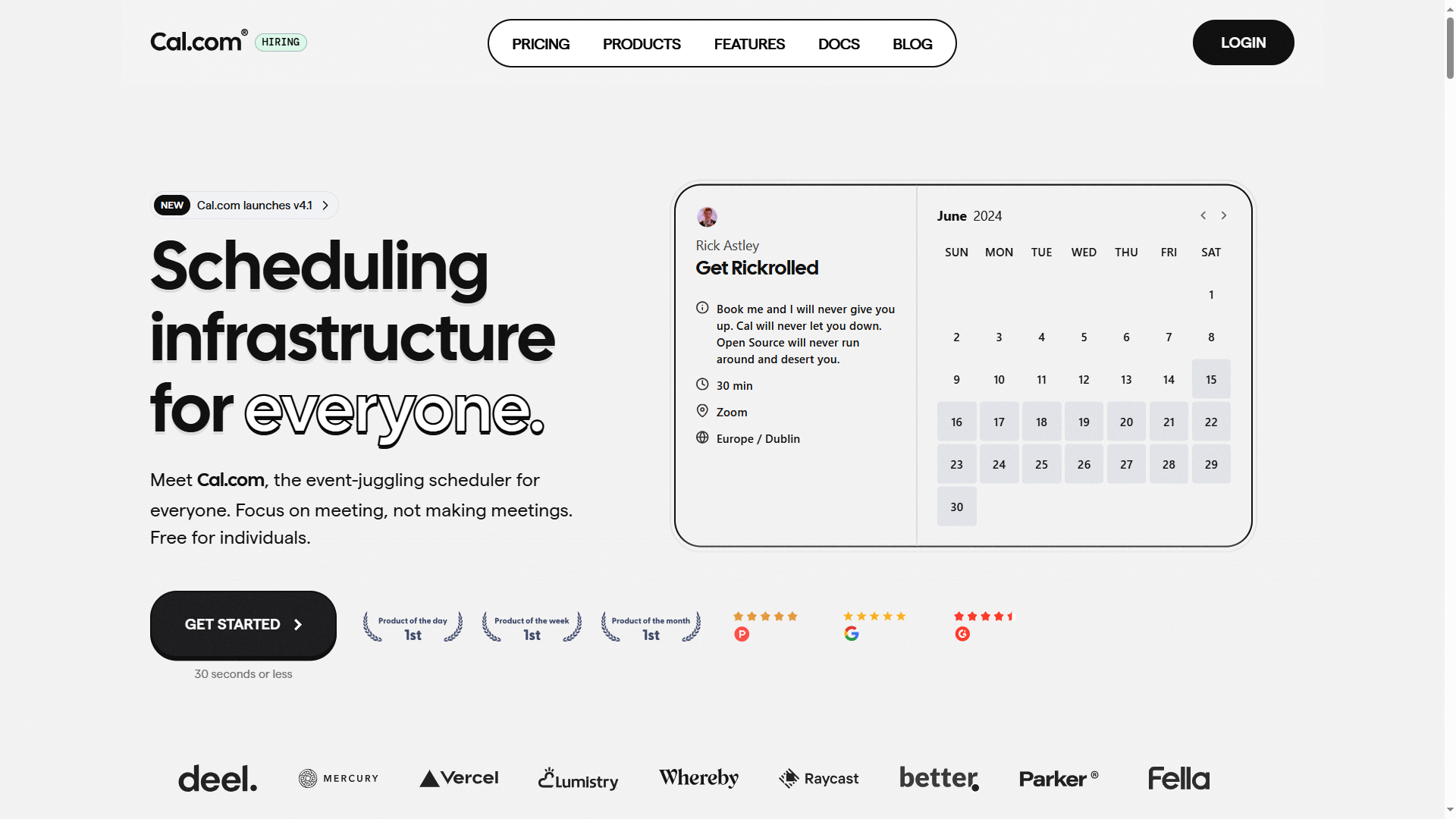
The discovery call scheduling process had been, before implementation, a multi-step negotiation: an email offering 3 available times, a response accepting or counter-proposing, a calendar invitation, a confirmation email, a reminder 24 hours before. For a high-volume lead environment, this process consumed significant assistant and coach time. For a 2-person coaching practice with no dedicated assistant, it consumed coach time directly.
The Cal.com integration eliminated this entirely. Once a lead was identified as ICP-matched, the chatbot presented an embedded booking interface. The prospect could see real-time availability, select a time, and confirm a call - all within the chat window, in the same session where they had just completed the qualification conversation.
The impact of this change on the no-show rate was substantial and direct. A prospect who books a discovery call during a motivated qualification conversation - after articulating their challenge, their desired outcome, and their timeline - is a qualitatively different booking than one who sends a contact form and later receives a calendar invitation via email. The former has made an active, considered commitment. The latter has passively received an invitation.
The data confirmed this: discovery call no-show rates dropped from 35% to 12% post-implementation. This was not primarily a function of reminder automation (though automated reminders were also configured). It was a function of qualification quality - better-qualified leads showed up because they had already invested in the conversation that earned them a slot.
The Results: Six-Month Assessment
Process Metrics: Before and After
| Metric | Before Paperchat | After 6 Months | Change |
|---|---|---|---|
| Average lead response time | 18 hours | Under 2 minutes | -98.8% |
| Qualification emails per lead | 3-5 emails over 1-2 weeks | 0 (chat replaces email) | Eliminated |
| Discovery call booking rate (qualified leads) | 25% | 67% | +168% |
| Discovery call no-show rate | 35% | 12% | -66% |
| Coaches' weekly qualification time | 12 hours | 2 hours | -83% |
| Leads captured on evenings/weekends | ~0 (lost) | 28% of total | New channel |
Revenue Impact
The six-month revenue impact assessment required separating the components. The headline figure - 40% increase in new client starts - was the composite outcome of several concurrent improvements:
| Driver | Mechanism | Estimated Contribution |
|---|---|---|
| Faster response to qualified leads | ICP-matched leads now booked immediately vs. 18-hour delay | ~35% of new client increase |
| Weekend/evening lead capture | Previously lost 28% of leads now captured | ~30% of new client increase |
| Reduced no-shows on discovery calls | More qualified leads, committed booking process | ~20% of new client increase |
| Improved nurture-to-conversion on unqualified leads | Immediate professional response → 15% higher nurture conversion | ~15% of new client increase |
At $350,000 in annual revenue with an average engagement value of approximately $8,000-12,000, a 40% increase in new client starts represents meaningful revenue - estimated at $85,000-$120,000 in additional annual revenue generated from the improved pipeline.
The Time Recovery Calculation
The less visible but equally significant outcome was the recovery of 10 coach hours per week. At a billing rate of $250-400 per hour (the range for leadership coaching at Executive Clarity's level), 10 recovered hours per week represents $130,000-$208,000 in annual billing capacity that had previously been consumed by non-billable qualification work.
Some of this capacity was reinvested in client work. Some was reinvested in business development - podcast appearances that generated leads, content creation, and referral relationship management. The point is that the time existed to be allocated strategically, where before it had been consumed by an administrative process.
Three Lessons from the Executive Clarity Implementation
Lesson 1: Chat Qualification Produces Better Data Than Form Qualification
The coaches expected the chatbot to collect the same qualification data that the contact form and intake emails had collected, just faster. What they found was that it collected better data.
Prospects who were asked qualification questions in a conversational context provided more context, more nuance, and more honesty than prospects completing a form. A form field asking "What is your primary challenge?" receives a clipped, formal answer. A chatbot asking the same question, after two prior exchanges that have established a bit of conversational flow, receives a more candid response.
The coaches noted that chatbot-qualified leads arrived at discovery calls having already articulated their situation in their own words - which meant the discovery call started at a deeper level than it had in the email-based intake process. The quality of the conversations improved, not just the efficiency of getting to them.
Lesson 2: Immediate Response to Unqualified Leads Had Measurable Impact
The routing of unqualified leads into a Zapier-triggered nurture sequence was designed primarily to serve ICP-matched leads better by keeping them in a separate flow. The unqualified lead outcome was a secondary consideration.
But the data produced a finding worth noting: leads who received an immediate, professional, personalized response from the chatbot - even when routed into a nurture sequence rather than a booking flow - converted from nurture email to discovery call at a 15% higher rate than cold leads who had received no immediate response.
The mechanism appears to be first-impression quality. A prospect who reaches out to a coaching firm and receives an immediate, thoughtful, relevant response - even from an AI - forms a different perception of the firm's responsiveness and professionalism than a prospect who submits a form and waits for a manual follow-up. That perception carries into the nurture sequence and affects conversion rates downstream.
Lesson 3: The Evening and Weekend Leads Were the Biggest Single Unlock
The recovery of 28% of previously-invisible leads - those coming in outside business hours - was the single largest driver of the new client increase. This was not a marginal improvement; it was the discovery of an entire lead cohort that had been systematically lost.
The profile of these leads was notable. Evening and weekend inquiries skewed toward more senior executives - people who had limited time during business hours to research coaching options, who did their personal development research in quieter moments. These were, in many cases, exactly the high-value clients the practice was designed for. They had been invisible because the intake process was only functional during a fraction of the hours when they were active.
The chatbot operates the same at 9pm Sunday as it does at 10am Tuesday. For professional services firms whose ideal clients are busy senior leaders, this availability gap is often larger than they realize - and closing it is one of the highest-leverage outcomes an AI chat implementation can deliver.
The Paperchat Architecture That Made This Possible
The Executive Clarity implementation used three specific Paperchat capabilities in combination:
Knowledge base training on coaching-specific content - this is what made the qualification conversation feel natural and accurate. The chatbot answered questions about the coaching methodology, the client profile, and the program structure using language that the coaches had written, not approximations generated from generic coaching knowledge.
Cal.com integration for direct booking - the booking happens inside the chat conversation, at the moment of peak commitment. Removing the step of "I'll send you some times" and replacing it with "here is the calendar" eliminated the scheduling friction that was killing conversion rates on qualified leads.
Zapier webhook for CRM routing - every qualification conversation, whether it ended in a booking or a nurture route, was logged to the CRM with the full transcript and the qualification data the chatbot had collected. The coaches could review any lead's qualification conversation before the discovery call, or before a follow-up email, with complete context.
These are not unusual capabilities. They are available to any Paperchat user on the Pro plan. What made them effective at Executive Clarity was the deliberate design of the qualification flow - the specific questions, the routing logic, and the training content that made the chatbot's responses feel like a natural extension of the coaching practice rather than a generic intake bot.
More Articles
How to Capture More Leads with an AI Chat Widget on Your Website
Turn passive website visitors into qualified leads using Paperchat's AI chat widget — with proactive messaging, lead forms, and CRM sync.
March 29, 2026
6 Ways to Use an AI Chatbot for Lead Generation (Not Just Support)
Most businesses deploy AI chatbots for support. The ones winning on lead generation are using them differently. Here are six proven approaches backed by current data.
April 12, 2026
How to Set Up AI-to-Human Handover in Your Customer Support Chat
A practical guide to configuring seamless handoff from your AI chatbot to a live agent — so no customer ever hits a dead end.
March 29, 2026