
How a SaaS Company Used AI Chat to Increase Free Trial Conversions
How Formly, a no-code form builder SaaS, used AI chatbot to lift free-trial-to-paid conversion from 8.3% to 14.1% in 60 days - a 70% improvement driven by proactive chat and instant pricing clarity.

Stan
@stan

The SaaS free trial is one of the most competitive conversion environments in software marketing. You have attracted a qualified user, given them access to a real product, and set a clock running. Everything that happens inside that trial period - every feature they discover, every friction point they hit, every question they cannot answer - accumulates into a binary decision: pay or leave.
For Formly, a no-code form builder competing in a crowded market with several well-funded free alternatives, the trial-to-paid conversion rate was sitting at 8.3%. The industry benchmark for comparable SaaS products runs between 10% and 15% (OpenView Partners, 2024). The gap between Formly's rate and even the low end of that benchmark represented roughly $200,000 in annual recurring revenue left on the table.
The solution the team arrived at was not a pricing change, a feature release, or a redesigned onboarding flow. It was an AI chatbot, deployed strategically at the friction points that exit survey data had already identified. Over a 60-day measurement period, free trial to paid conversion climbed from 8.3% to 14.1% - a 70% improvement - while demo call bookings increased by 156%.
This case study examines how that happened, what the chatbot was configured to do at each deployment point, and what the revenue impact looked like at the end of the measurement period.
The Conversion Funnel: Where Trials Were Actually Failing
Before any implementation decision was made, the Formly team conducted a structured analysis of trial failure modes. Exit surveys, session recording data, and cohort analytics combined to produce a relatively clear picture.
2,400 free trial accounts were activated each month. Of those, roughly 199 converted to paid plans (8.3%). The remaining 2,201 left. The question was why - and more specifically, whether the reasons were addressable.
| Conversion Blocker | Share of Churned Trials | Nature of Problem |
|---|---|---|
| Couldn't figure out a feature | 34% | Knowledge/friction - solvable |
| Unclear pricing or plan limits | 28% | Information - solvable |
| Competing with free alternatives | 22% | Positioning - partially addressable |
| No immediate help available | 16% | Availability - solvable |
78% of trial failures traced to problems that were, in principle, solvable with better information delivery. The product had the features users needed. The pricing was competitive. The problem was that users could not access the right information at the right moment to make the decision to convert.
The 28% citing "unclear pricing or plan limits" was particularly telling. This is a known SaaS conversion killer: a user who has reached the point of considering payment but cannot quickly understand exactly what they would be paying for, what they would lose when the trial ends, or how a paid plan compares to their current experience - will default to inaction. Inaction, in a trial context, means churn.
The 16% citing "no immediate help available" was almost entirely concentrated in the hours between 6pm and 9am local time. 40% of all trial-related support tickets were submitted outside business hours. The sales team - two people covering US Eastern hours - was structurally unavailable for the majority of the periods when trial users were actively using the product.
The High-Intent Signal That Was Being Ignored
Session recording data surfaced a particularly striking finding: users who spent 30 or more minutes in the product during their trial had a substantially higher likelihood of converting to paid. But this high-intent behavior was not being met with any proactive engagement. A user who invested 35 minutes exploring Formly's conditional logic features, integration options, and team collaboration settings - then left without converting - was simply lost.
The team calculated that approximately 180-200 such high-intent sessions were occurring every month without any sales or conversion touchpoint. These were not people who had decided against Formly. They were people who had not yet been given a reason to commit.
The AI Chat Configuration: Four Deployment Points
The chatbot implementation was not a single deployment. It was four coordinated interventions, each configured for a specific context and conversion goal.
Deployment 1: Website Pricing Page
The pricing page chatbot addressed the "unclear pricing" failure mode directly. The chatbot was trained on a dedicated pricing FAQ covering the questions exit surveys had identified as most common:
- "What happens to my forms when my trial ends?"
- "What's the difference between the Starter and Pro plans?"
- "Can I upgrade partway through the month?"
- "Are there limits on form submissions?"
- "Does the free plan ever expire?"
The proactive trigger was set to fire after 45 seconds on the pricing page - enough time for a user to read through the plan comparison, have a question form in their mind, and not yet have navigated away in frustration.
This single deployment point turned out to be the highest-performing configuration in the entire implementation. Users actively comparing plans converted at significantly higher rates after a pricing clarification chat than they did with no chat present. The specific question "what do I lose when my trial ends?" generated the highest-conversion responses of any query type tracked during the measurement period.
Deployment 2: In-App Onboarding Flow
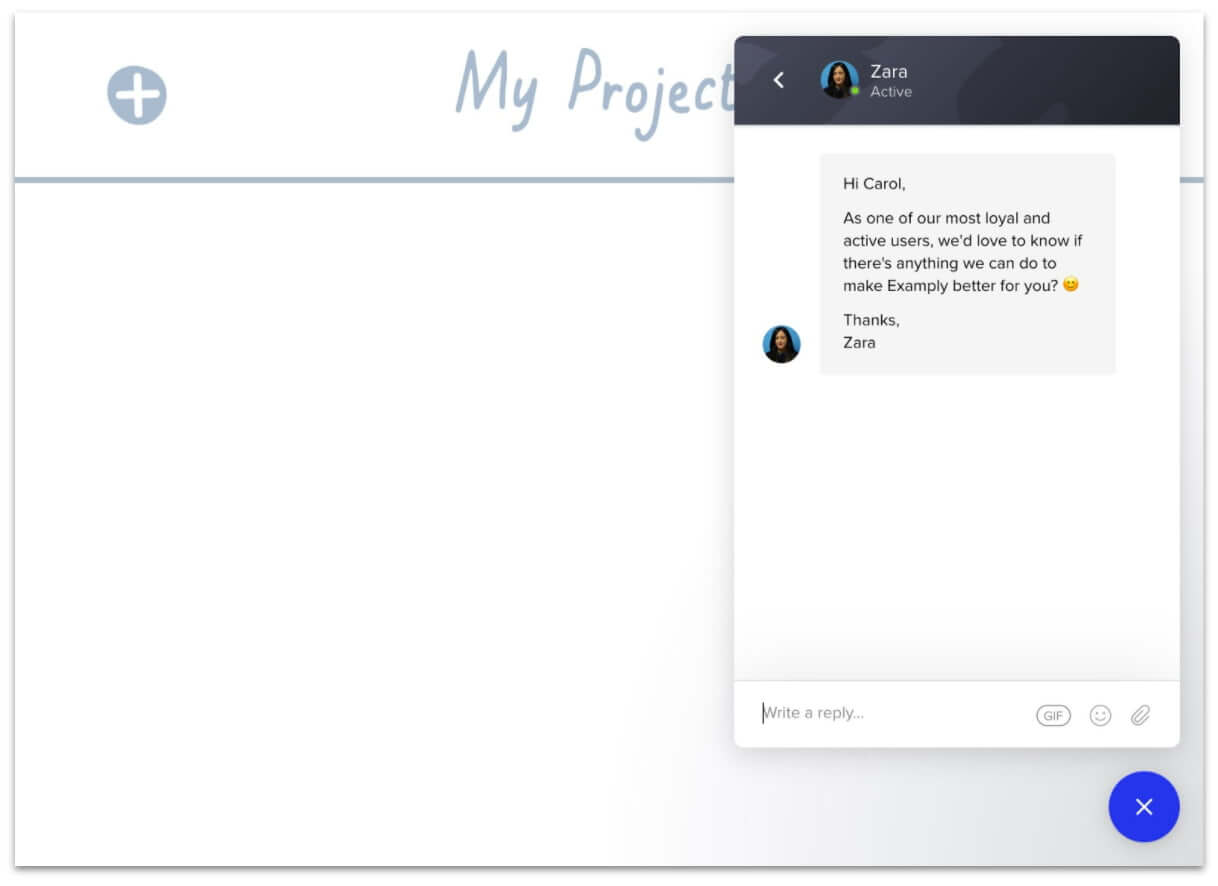
Trial users who encountered friction during their first product session received a proactive message after 5 minutes of inactivity or navigation-without-action - a behavioral signal the team had identified as correlating with onboarding stalls.
The chatbot in this context was trained on the full Formly feature documentation, focusing on the onboarding tasks most commonly associated with early abandonment: embedding forms, setting up notifications, configuring conditional logic, and connecting integrations. The goal was to convert a moment of friction into a moment of resolution - keeping users in the product long enough to reach a point of demonstrated value.
After the first form creation event (a significant activation milestone), the chatbot sent a distinct follow-up message designed to extend engagement into deeper feature exploration:
"Your first form is live - that's the hardest part. Ready to set up email notifications or connect it to your CRM?"
This trigger accounted for a meaningful share of the trial activation improvement observed over the 60-day period.
Deployment 3: High-Intent In-App Trigger
The 30-minute session milestone was configured as a dedicated trigger - separate from the onboarding flow. A user who had spent 30+ minutes actively exploring the product was treated as a high-intent prospect and received a message calibrated to that intent level:
"You've been getting deep into Formly - looks like you're building something substantial. Want to talk about the best plan for what you're working on, or book a quick demo?"
This trigger offered two options: instant AI-powered plan guidance, or a demo booking with the sales team via the Cal.com integration. Users who chose the demo booking path were pre-qualified by the preceding conversation - the chatbot had already established what they were building, what scale they anticipated, and whether they needed any enterprise features.
The 30-minute trigger converted at 22% - by far the highest conversion rate of any chatbot touchpoint in the implementation. The mechanism was straightforward: high engagement is the strongest behavioral signal of purchase intent, and that signal was being met for the first time with an immediate, relevant prompt.
Deployment 4: After-Hours Lead Capture
The fourth configuration addressed the structural problem of a 2-person sales team unavailable for 70% of the hours when trial users were active. Outside business hours, the chatbot operated as a full-service conversion tool: answering questions, qualifying prospects, and capturing leads that the sales team had previously been losing entirely.
The after-hours configuration included explicit Cal.com integration - users who wanted to speak with a sales rep could book a call directly from the chat, with the appointment landing in the sales calendar for the next available business hours slot. This converted an "I'll think about it and forget" moment into a committed calendar event.
The Results: 60-Day Measurement Period
Free Trial Funnel: Before vs. After AI Chat
Key funnel stage rates (% of monthly trial accounts) — 60-day comparison
Source: Formly internal analytics, 2025. Pricing Engagement and Conversion Chat rates are estimated from session and chat log data.
Primary Conversion Metrics
| Metric | Before | After 60 Days | Change |
|---|---|---|---|
| Free trial to paid conversion | 8.3% | 14.1% | +70% |
| Trial activation rate (first form created) | 61% | 79% | +30% |
| Demo calls booked per month | ~18 | ~46 | +156% |
| After-hours qualified leads captured | ~0 (lost) | 47/month | New channel |
| High-intent trigger (30min) conversion | N/A | 22% | Established |
Revenue Impact
The conversion rate improvement, measured against Formly's $1.2M ARR baseline and monthly trial volume, produced an estimated $85,000 in additional ARR over the 60-day measurement period.
This figure is calculated conservatively: 2,400 monthly trials, conversion improvement from 8.3% to 14.1% = approximately 138 additional conversions per month. Against an average new customer ARR of roughly $300 (mid-tier plan, first year), the monthly revenue addition was approximately $41,400, or $85,000 over the two months measured.
The demo call pipeline represents additional upside not fully captured in the 60-day window, as enterprise deals from the 12 high-intent bookings were still in mid-cycle at the time of measurement.
The Enterprise Finding
The human handover configuration for enterprise inquiries produced a finding the team had not anticipated. Over the 60-day period, the chatbot identified and escalated 12 conversations that showed enterprise signals - discussion of team size, API requirements, custom branding, compliance needs, or contract language. All 12 were connected to the sales team. By the end of the measurement period, the sales team had closed deals from these leads representing new ARR they estimated would have been lost without the escalation mechanism.
The specific reason these leads would have been lost was timing: the enterprise inquiries came in at all hours, often after a prospect had been doing late-evening product research. Without the chatbot, these visitors would have bounced without a contact event. With the chatbot, their intent was captured, their context was documented, and they received a calendar-connected follow-up from a sales rep within 12 business hours.
The Conversion Funnel: Before and After
| Stage | Before Chatbot | After 60 Days | Notes |
|---|---|---|---|
| Trial accounts activated/month | 2,400 | 2,400 | No change in acquisition |
| Complete first form (activation) | 1,464 (61%) | 1,896 (79%) | Chatbot friction reduction |
| Engage with pricing page | ~680 (est.) | ~920 (est.) | Higher retention to pricing stage |
| Enter sales/conversion conversation | ~90 (estimated) | ~340 | AI chat creating conversion moments |
| Convert to paid | 199 (8.3%) | 338 (14.1%) | Primary metric |
| Demo calls (enterprise path) | 18/month | 46/month | 156% increase |
What the Pricing Page Chatbot Actually Said
The highest-performing chatbot deployment - the pricing page configuration - succeeded because it answered the questions users were already asking internally. The most conversion-impactful response in the entire dataset addressed a single question:
"What do I lose when my trial ends?"
The chatbot's response was specific, non-alarming, and designed to reframe the question: it explained exactly what would happen to existing forms (they remain accessible), what submission processing would do (pause until the user selects a plan), and what the lowest entry price looked like. This answer converted at a rate substantially above the average for all other chatbot interactions.
The lesson is not unique to Formly: pricing anxiety is one of the most consistent conversion blockers in SaaS free trials, and it is almost always driven by ambiguity rather than actual objection to the price. A user who is not sure what they are buying, what they would lose, or what flexibility they have defaults to inaction. A clear, immediate answer resolves that ambiguity in 30 seconds and removes the cognitive barrier to a purchase decision.
This is the core value proposition of an AI chatbot deployed at the conversion layer: not to replace the sales process, but to remove the information gaps that prevent users from entering it.
The After-Hours Problem in Numbers
The structural finding about after-hours trial activity deserves specific attention because it applies to virtually every SaaS company with a self-serve trial motion.
40% of trial-related support and conversion activity at Formly occurred between 6pm and 9am local time. This is consistent with broader data on SaaS user behavior: product evaluation often happens outside business hours, when decision-makers are in a quiet environment without the interruptions of a workday.
Before the chatbot implementation, every one of these interactions was lost. A potential customer hitting a friction point at 10pm had two options: wait until morning for support (often forgetting by then), or move on. With the chatbot in place, that 10pm moment became a conversion opportunity - questions answered, leads captured, demo calls booked.
The 47 after-hours qualified leads captured per month in the post-implementation period were not incremental to the existing pipeline. They were net-new leads that had been invisible to the business before the chatbot was deployed. At the team's historical lead-to-customer conversion rate, this represented a meaningful addition to the growth funnel that was not available before.
Three Principles That Made This Work
Not all chatbot implementations produce results like these. The Formly case worked because of three specific decisions made during configuration - decisions that are generalizable to other SaaS trial environments.
Principle 1: Train on the Specific Questions Users Are Actually Asking
The chatbot was not trained on generic SaaS positioning content. It was trained on the specific questions exit survey data had identified as responsible for trial churn: pricing limits, plan comparisons, feature capabilities, what happens at trial end. This specificity is what produced the high conversion rate on the pricing page. Generic answers to these questions would have felt evasive; specific answers resolved objections.
Principle 2: Deploy at the Moment of Decision, Not the Moment of Interest
There is a meaningful difference between deploying a chatbot to engaged users and deploying it to decision-making users. The pricing page configuration activated after 45 seconds - enough time for a user to have read the plan options and be actively comparing. The 30-minute in-app trigger fired when behavioral data indicated a user was already invested. These were decision moments, not discovery moments, and the messaging was calibrated accordingly.
Principle 3: Connect AI Qualification to Human Scheduling
The Cal.com integration was not a convenience feature. It was a conversion mechanism. A user who wanted to speak with a sales rep could book a call in the same chat window where the question arose - without navigating to a contact form, waiting for an email response, or completing a multi-step qualification form. The removal of friction between "I want to talk to someone" and "I have a call booked" was directly responsible for the 156% increase in demo call volume.
Paperchat's native Cal.com integration handles this without custom development: the chatbot identifies high-intent signals, offers a booking option, and connects the user directly to the sales calendar. For SaaS companies with an enterprise sales motion running in parallel with self-serve trials, this is the integration that closes the gap.
More Articles
How to Capture More Leads with an AI Chat Widget on Your Website
Turn passive website visitors into qualified leads using Paperchat's AI chat widget — with proactive messaging, lead forms, and CRM sync.
March 29, 2026
6 Ways to Use an AI Chatbot for Lead Generation (Not Just Support)
Most businesses deploy AI chatbots for support. The ones winning on lead generation are using them differently. Here are six proven approaches backed by current data.
April 12, 2026
How to Add a Live Chat Widget to Your Website in Under 10 Minutes
A step-by-step guide to installing Paperchat's AI chat widget on any website — no developer required.
March 29, 2026